


3D Printing is reshaping product design, production and distribution worldwide. This technology is being used from medical to automotive, aerospace to construction and fashion industries to boost production speed, flexibility and innovation. The idea of a future concept has turned into an important concept in modern industrial development.
01 / The Evolution of 3D Printing Technology
From producing prototypes to a more powerful manufacturing solution, 3D printing has moved from being a technology primarily employed for prototyping to being a tool that can create complex products, functional product parts and customized pieces. Unlike the process of cutting material off a solid block, 3D printers use digital designs to create objects, layer by layer.
The increased printing speed, accuracy, materials and software has made 3D printing more accessible for manufacturers, businesses, and designers. Nowadays, businesses can use it to create products, test design and even produce parts in a more flexible way than some traditional methods can.
02 / Revolutionizing the Automotive and Aerospace Industries
The larger the automotive and aerospace industries are.The automotive and aerospace industries are major ones that are benefiting from 3D printing. This technology can be applied by manufacturers to produce lighter components, intricate engine components, prototypes and special tools that can enhance product performance.
In the aerospace sector, weight reduction is particularly critical, as it can lead to increased fuel efficiency and performance. Automotive companies are also leveraging 3D printing for rapid vehicle development, special parts manufacturing and for testing new designs.
These innovations are shaping the rethinking of vehicle, aircraft and transportation system design.
03 / Transforming Healthcare Through Customized Solutions
The application of 3D printing is driving a lot of innovation in healthcare. Medical practitioners can design patient-specific anatomical models and surgical planning tools, dental products, and custom prosthetics based on individual needs.
Anatomical models made using 3D printing can provide a better understanding of complex structures before the procedure, which can enhance preparation and understanding. Patients can also benefit from improved comfort and fit with customized prosthetics and implants.
With the advances of medical technology, 3D printing is creating new opportunities for personalized health care and more patient-centric treatments.
04 / The Future of Construction and Architecture is Now 3D
The construction sector is starting to experiment with 3D printing as a viable alternative to the building of houses, buildings and architectural parts. Large-scale printers are able to deposit the construction material in a controlled layer to form walls and structural shapes.
This technology can minimize material waste, make some of the construction processes easier and increase the production speed of some parts of the construction. It also enables architects to test out shapes and designs that can be hard or costly to create with normal methods.
The concept of 3D printing buildings might be a game-changer in the near future, especially when it comes to building design and material efficiency.
05 / Sustainable Manufacturing and Waste Reduction
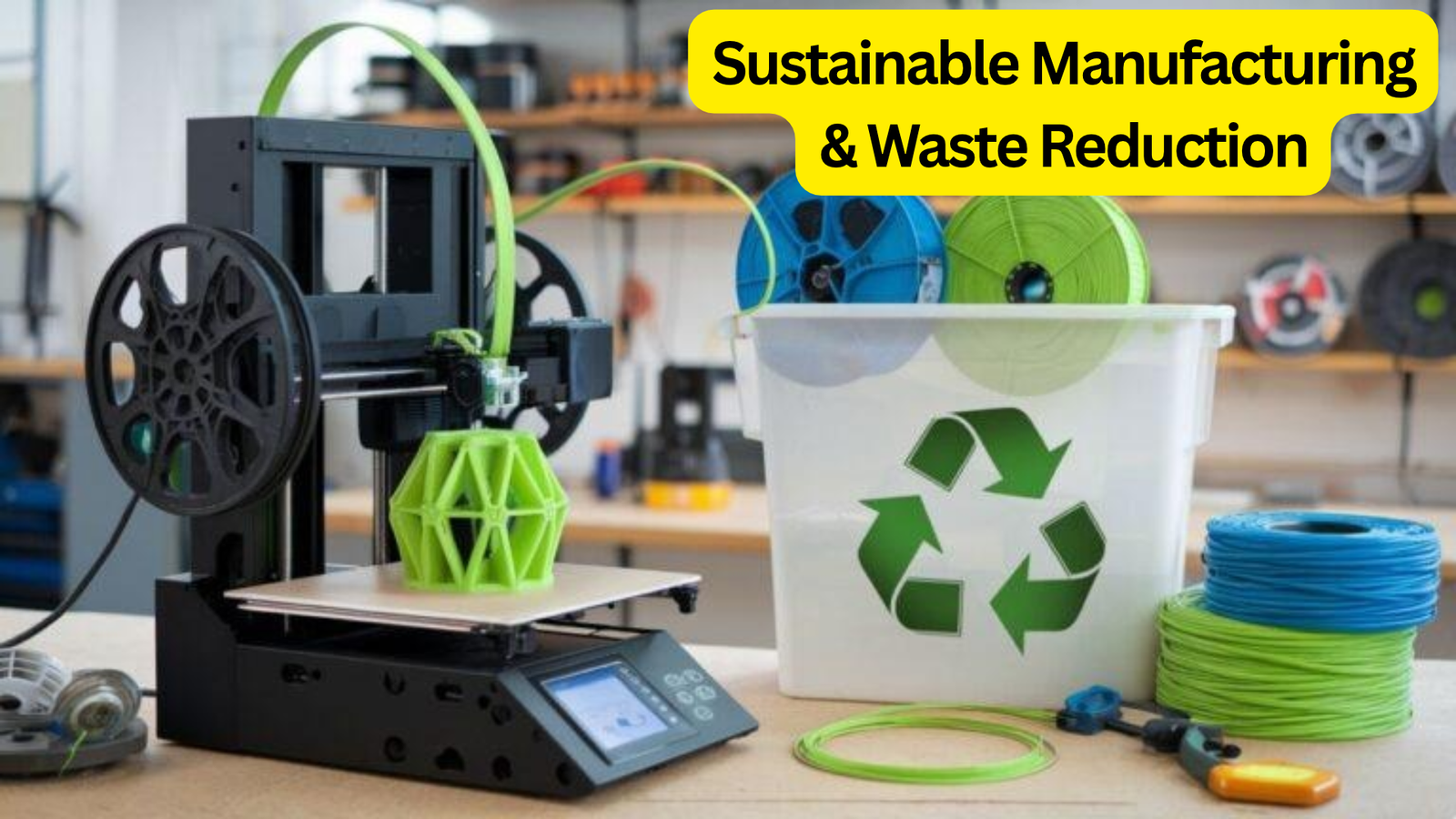
Sustainability is emerging as a key motivator for industries to look into 3D printing. In the traditional manufacturing process, material is taken off the bigger blocks, thus generating waste. In some applications, the technology of additive manufacturing could save unused materials because it produces objects layer by layer.
Few manufacturers are also testing recycled plastics, bio-based materials, and improved manufacturing processes. Proximity to needed product can offer the possibility to make products closer to the end user, decreasing transportation needs and making supply chains easier.
As 3D printing evolves, there is the potential for greater efficiency with energy consumption and some materials may be more easily recycled.
06 / The Future of Fashion, Consumer Products and Customization
Designers are taking a new approach to fashion, footwear, jewelry and accessories with 3D printing, and its influence is spreading to consumer products as well. Businesses can develop their own unique products, featuring special textures, structures, and shapes, rather than relying on mass-produced designs.
3D printing is being used by shoe manufacturers to make the midsoles in their new shoes, and designers are using advanced materials and digital models to produce clever jewellery, wearable accessories and fashion items.
One of the greatest benefits of the technology is personalisation. Consumers can potentially have a choice of products which focus on their preferences, their size and their individual requirements.
07 / Challenges, Opportunities and the Future of 3D Printing
Although 3D printing holds great promise, there are some challenges to be overcome. The technology can be costly, slow to produce, limited material availability, and difficult to control quality and require expertise which can make it hard for businesses to accept it on a large scale.
But, continuous developments in metal printing, multi-material production, automation and digital manufacturing are opening up new possibilities. There are many applications for 3D printing among companies, such as the production of special parts, on-demand production, quick product development, and more flexible manufacturing processes.
The future of 3D printing will likely be a mix of traditional manufacturing processes and 3D printing – each will be utilized when it makes the most sense.
Conclusion
The 3D printing revolution is transforming the modern industries as it is adding flexibility, customization and innovation options to the manufacturing process. Its uses are continuing to grow beyond their traditional scope, from aerospace components, medical implants, construction, fashion and sustainable production.
Challenges like cost, scalability and material are yet to be overcome, but technology continues to improve. In a future that promises to increasingly be defined by smart manufacturing, 3D printing has the potential to become a vital part of the manufacturing process even more than before.