

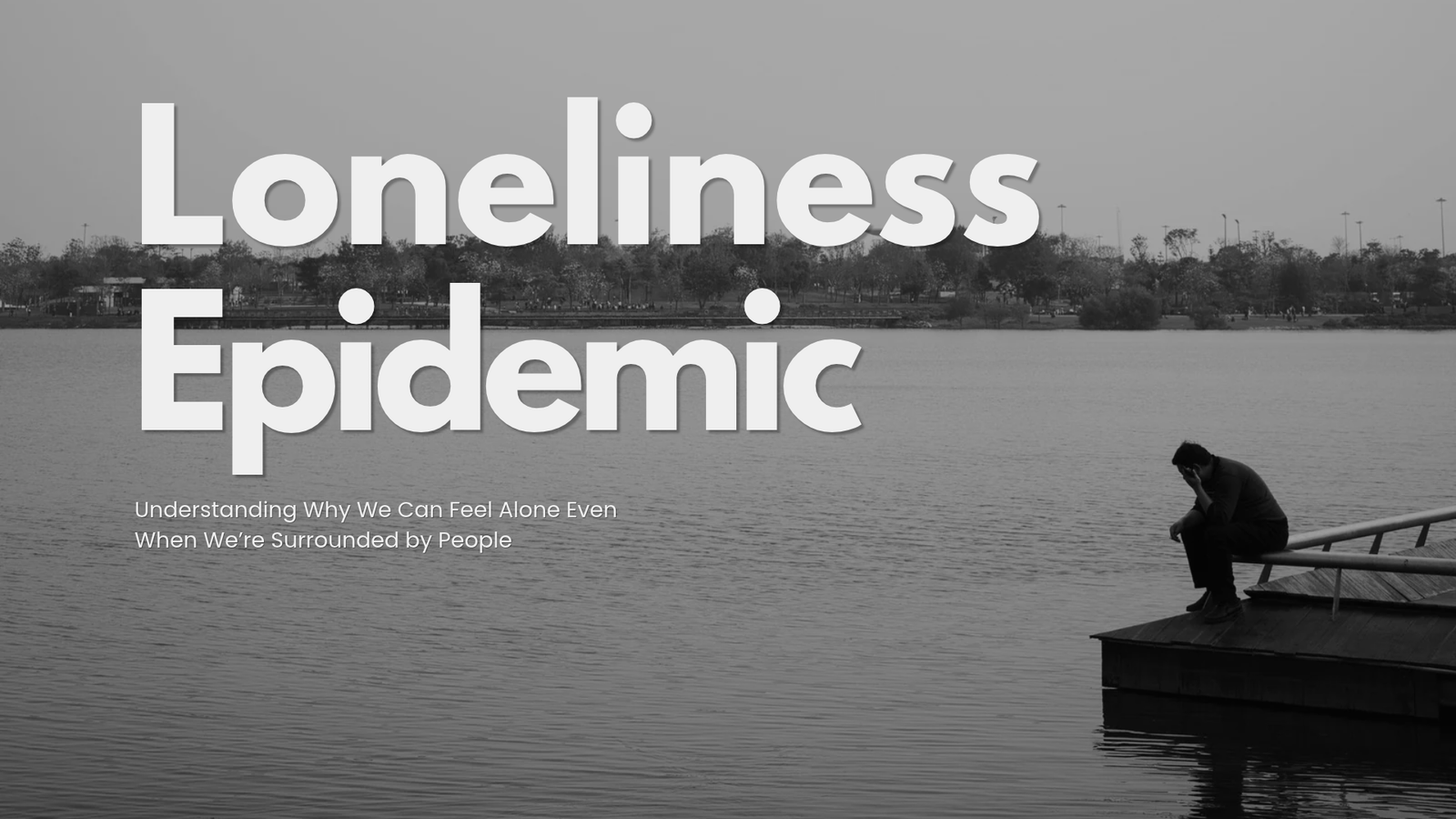
Loneliness is one of the most critical social issues of today. In this day in age of instant communication, social media, smart phones and global connectivity, millions of people are feeling more and more isolated and disconnected emotionally. Loneliness is impacting people of all ages, across cultures and communities, whether young adults or older adults living alone. It's not just about a person's mental health anymore; it's a broader social problem that affects mental health, physical health, relationships and the functioning of communities.
01 / Loneliness in a Connected World
With the advent of modern technology communicating with people around the globe has become easier than ever, while at the same time many people feel they lack meaningful relationships. While social media can be a great way to connect, it can't replace genuine, in-person interactions, comments, likes and more. While working, playing and communicating increasingly takes place online, some are not spending as much time on developing robust social relationships in their everyday lives.
The problem of loneliness is increasing in urban areas where millions of people live in close proximity, but have fewer personal interactions. The changing nature of family, relocation, long working hours, and a busy lifestyle are all taking their toll for people in a world where physical closeness doesn't always signal emotional connection.
02 / How the Surrounding Community and Culture Affect Health and Loneliness
Multiple changes in society and lifestyle are adding to the loneliness epidemic. Increasing numbers of people live alone, families are becoming geographically separated, and traditional community interactions are changing. Relocating for work or school may hinder the creation of a lasting network and friendships.
Economic hardship, cost of living, heavy workloads and little leisure time may mean that people have less time to spend socializing. Many cultures expect people to deal with their own problems without seeking emotional support, which can make it difficult to seek out emotional support. All these things are contributing to a situation where the sense of loneliness becomes an experience instead of a fleeting one.
03 / Social Media and the Illusion of Connection
The way people construct and sustain relationships has completely changed in the era of social media. It enables users to communicate with their friends, share experiences, and find communities of like-minded individuals. But overuse can also be a false sense of bond without real emotional support.
People who see carefully curated lifestyles, celebrations, achievements and relationships on a regular basis can compare their life to others. This can lead to a sense of inadequacy, exclusion and loneliness. Digital platforms can be useful when it comes to connecting with others but meaningful relationships require trust, understanding, attention and emotional interaction.
04 / The Effect of Loneliness on Mental and Physical Health
Loneliness can have a significant impact on mental and physical wellbeing. If you continue to feel isolated, you may experience stress, anxiety, lack of self-esteem, emotional fatigue and depression. Without emotional support, the day to day challenges can become harder to handle and a sense of belonging can become more fragmented.
Chronic social isolation is also linked to health risks, such as insomnia, heightened stress reactions, and the risk of cardiovascular diseases. When there is no authentic socialization, it can impact motivation, daily activity and quality of life. Loneliness as a Health and social issue is therefore crucial in order to enhance long term well-being.
05 / Loneliness Among Young People and Older Adults

Loneliness can happen across all ages, although it can be tough for youth and older adults. For young adults, there can be challenges with school, career, societal expectations, social media, and adapting to living on their own. They might feel misunderstood and not be able to form meaningful friendships even in their classmates or colleagues.
Loneliness can be a problem for older people due to the loss of a spouse, loss of family members, reduced mobility, or retirement. With the migration of children to other cities and communities becoming less connected, many elderly people are less likely to be able to interact with them on a regular basis. There is a need for both age groups to have accessible support, welcoming communities and opportunities to build relationships that foster a sense of belonging for them.
06 / Districts Will Work to Create Stronger Communities to Address Loneliness
Loneliness is not a problem that can be solved at the personal level; it is also a problem that needs to be solved within the community and in the social environment. Clubs, sports, volunteering, libraries, neighborhood activities and events can provide opportunities for people to meet naturally and build friendships over time.
Other important ways of making a difference are through encouraging social interaction and making workplaces, schools, universities and public institutions inclusive. It can be a simple thing like checking in on someone, reaching out to join an activity, or listening without judgement. One of the best ways to reduce social isolation is to build a community where everyone is welcomed and valued.
07 / What is the Future of Human-Human Connection in a Digital Society?
Technological advancement will not be the sole determinant of the future of society; meaningful human relationship will be as well. People can receive support through digital platforms, virtual communities and new communication technologies, particularly when there is distance or mobility that makes it harder to find support physically. But technology should be used as a complement, not a replacement, to real relationships.
A healthier social future involves fostering empathy, emotional awareness, a balance between work and life, and authentic opportunities for connection. There are many ways to prioritize social connection, and it is a shared responsibility for every government, business, educator, family and community. A world that prioritizes human-to-human interaction over productivity and technological development can be more inclusive, supportive and emotionally resilient.
Conclusion
This is the world's loneliness epidemic to remind us that online connectivity isn't always connectedness. All this is making meaningful relationships more essential than ever as everything else in life is changing, becoming more distant, and digital communication playing a larger part in our daily lives.
Loneliness is not a personal fault or something that needs to be hidden or dealt with alone. It is a social issue that needs empathy, sensitivity and a sense of responsibility. The community, real conversation, vulnerable individuals, and meaningful interaction all need to be strengthened in order to solve this emerging challenge in society.
Ultimately, the greatest solution to loneliness may not be more technology or more communication—but more understanding, more time for one another, and stronger human connections.