


This tradition of wandering from one location to another in search of a better life, safety, education and a brighter future has always been present. Migration is now one of the most powerful drivers of societies, economies and cultures today around the world. All around the world, millions of people migrate across national borders annually and some move within the country due to jobs, family requirements, war or climate.
In 2024, the United Nations estimated that some 304 million people were residing abroad at the time of their birth or in countries other than their place of birth, which is about 3.7% of the world's total population. These statistics represent real lives and life-changing choices, new life and new obstacles. Migration is transforming lives and the connectivity between borders and people, whether it's when workers relocate to large economic centres, when families flee conflict, or when students look to international education.
Migration is more complex than ever, as the destinations evolve and global circumstances change. Learning its causes, challenges, and opportunities allows an understanding of how human movement is influencing the future of our interconnected world.
1. Why People Move: The Principal Drivers of Global Migration
There are numerous factors that affect migration and each migration has its own tale. Economic opportunities continue to be some of the significant motivations for people to relocate overseas. People migrate from their own countries in search of higher-paying employment, better standard of living, and a more secure future for themselves and their families.
Education is another key factor since international students come to a country with reputable universities, special programmes and career prospects. Family reunification is also an important factor, enabling individuals to come with family members who are already established in the country.
But all migration isn't voluntary. Political unrest, conflict, persecution, or natural disasters and environmental stress may force people to flee their homes. The various motivations are indicative of the fact that migration is not merely a movement from one place to another, but also a search for security, stability and opportunities that might not be available at home.
2. Changing Destinations: Where Are Migrants Moving?
The destinations of migrants have evolved over time worldwide. The old destinations like the United States, Canada, Germany, the United Kingdom and Australia remain popular due to employment and educational opportunities and also the presence of established migrant communities.
Meanwhile, nations in the Gulf countries, such as the United Arab Emirates, Saudi Arabia and Qatar, have emerged as key destinations for overseas workers. Rapid development in infrastructure, construction, healthcare and other industries, requires workers from various parts of the world.
European countries continue to be important destinations, but there are variations in immigration policies, labour needs and economic conditions in Europe. At the same time, some migrants have raised their sights to smaller cities and emerging economies, rather than just the classic destinations around the world.
The varying trends highlight the strong linkage between migration and economic development, labour demand, foreign affairs and destination country quality of life.
3. The Human Stories Behind Migration
An underlying migration statistic is a personal experience. Some people make tough choices to save their family members or to distance themselves from bad situations; others depart their hometowns with lofty ambitions of having great careers.
They might feel excited, lonely, and adapting to another culture at the same time when they are in the process of moving to another country. A migrant worker can work away from family for years to support the family financially. Refugees can come to places they are not familiar with, and have lost their homes and belongings, as well as their sense of security.
These experiences show the emotional dimension of migration which is seldom talked about in terms of politics and economy. A new life can mean independence and confidence, and opportunities, but it can also mean uncertainty, homesickness and challenging personal sacrifices.
The sharing of these stories is important in achieving a better balance on migration and in reminding societies that migrants are people, with hopes, responsibilities and different life experiences.
4. Economic Effects: The Effect of Migration on World Economies
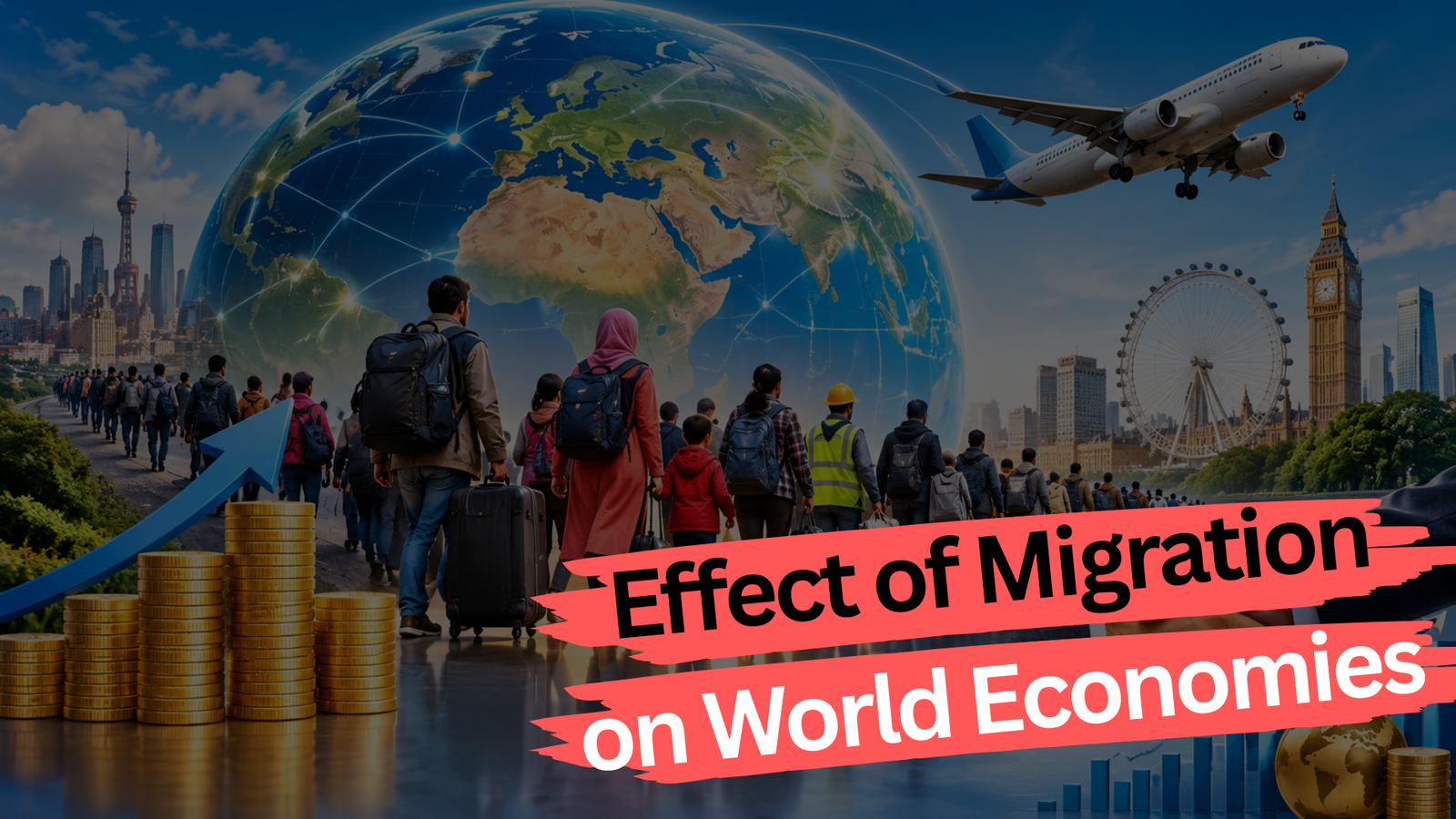
Migration is an important part of the economic development of both origin and destination countries. Migrant workers work in fields like healthcare, construction, agriculture, manufacturing, hospitality and technology. International workers in many countries alleviate labour shortage and contribute to important public services.
Migrants also pay taxes, spend money as consumers, are entrepreneurs, and are employment experts. Many start businesses, provide employment and introduce new ideas into local markets.
Remittances – cash sent home by migrants – can help families, boost education and health systems, and bolster local economies, for nations of origin. These financial transfers are significant for those communities that rely on income outside the country.
But there are also economic challenges involved with migration. Others suffer from a lack of skilled workers due to the migration of large numbers of skilled persons to other countries. If population growth is not matched by effective planning, pressure on housing, public services and infrastructure may be experienced in destination countries.
The overall economic effect will be determined by the way governments deal with migration and provide opportunities for migrants and local communities.
5. The Integration Challenge, The Discrimination Challenge and Social Barriers
Migration may offer opportunities for a new life, but settling in another country can sometimes be difficult. Language differences are one of the earliest barriers faced by migrants, especially if seeking work, accessing health care or understanding official procedures.
Integration can also be challenging due to cultural differences. Migrants may need to adjust to new customs, social norms, work and learning environments. If they are not properly supported, these can result in misunderstandings and isolation.
Other issues are discrimination and inequitable employment opportunities. Difficulties can be faced by some migrants in obtaining their qualifications recognised, finding adequate accommodation or access to essential services. Still others suffer from discrimination due to their nationality, background or immigration status.
The key to successful integration is cooperation among the governments, employers, educational institutions, and local communities. The culture and language support of migrants through language programmes, the equal opportunity to access the jobs available, accessible access to public services and community initiatives can help them to engage fully in society without losing their cultural identity.
6. Climate Change and Forced Displacement: Now a Global Concern
Environmental issues are increasingly on the agenda of the global migration debate. Seesaw changes in sea level, frequent droughts, flooding, heat waves and severe storms can hurt homes, livelihoods and make some places hard to live in.
Agriculture and fishing and natural resources based communities are especially vulnerable to environmental pressures. Loss of livelihoods or unsafe living conditions may lead to migration to other areas or countries.
People migrate for climate-related reasons, but also because of environmental conditions that affect their decision to emigrate internationally. In many cases, climate change is intertwined with poverty, political instability and pre-existing social inequalities, and communities find it hard to bounce back.
A key issue is that environmental refugees are not necessarily refugees in the sense of the 1951 Refugee Convention. This raises intricate issues regarding international protection, human rights and government obligations.
Protection of vulnerable groups will increasingly rely on long-term planning and international cooperation, as well as disaster preparedness, due to growing environmental risks.
7. The Future of Global Migration: Policies, Technology and New Opportunities
Economic shifts, demographic trends, environmental conditions and international cooperation will set the course of migration in the years to come. In nations experiencing population aging, there will be a need for foreign labor to help in health care, construction, manufacturing and other key industries.
Technology is also transforming the migratory experience. Digital platforms provide convenience to people looking for foreign job, comparing destinations, getting information about visa requirements, and keeping in touch with their families. With the arrival of online education and home working, there are also new opportunities for studying or working abroad, but the immigration and work law still applies.
Meanwhile, governments are looking to make changes in their immigration policies to meet labour market requirements, border management, humanitarian obligations and national security considerations. Some countries are implementing skills-based migration programs, and others are increasing their focus on stringent immigration measures.
Such policy will be needed in the future to ensure migrant rights and economic development and social stability. Safe and sustainable migration can be achieved by creating and providing safe and mutually accessible recruitment, fair and transparent legal frameworks and integration programmes, as well as international cooperation agreements.
Conclusion
Global migration is more than just the international migration of people. It is millions of personal stories shaped by opportunities, family, education, conflict and the quest for a safer life. It links societies, empowers economies, fosters new cultural viewpoints, and opens avenues for people to create better futures.
Migration also, however, poses serious challenges such as discrimination, integration, labour exploitation, housing pressures, forced displacement etc. Restrictive polices are not enough to give solutions to these issues. They need collaboration, good planning and dedication to human rights.
Migration will be central to global development in the world of today and the future. For countries that acknowledge its opportunity and its responsibility, they will be prepared to deal with future population movements.