

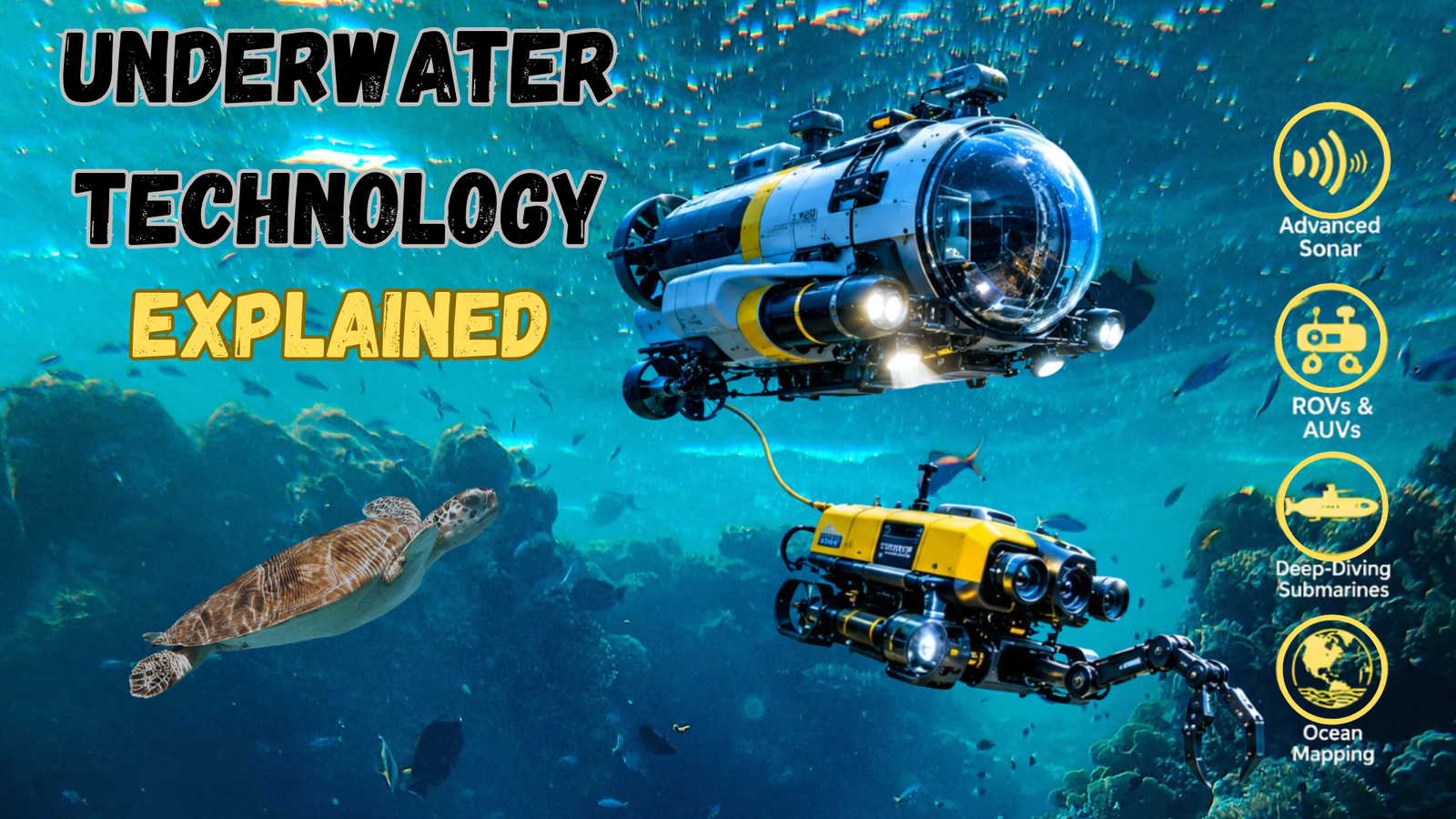
The oceans of the world blanket over 70% of the Earth's surface, but much remains uncharted in the deep. Under the sea, beneath the waves, is an extraordinary deep-sea ecosystem, underwater mountains, hidden geological structures and valuable scientific findings. Those unknown places have never been easy to explore due to the high pressures, low visibility, and challenging operating conditions.
But the current underwater technology is revolutionizing ocean exploration by marine industries, scientists, and researchers. New technologies such as advanced submarines, autonomous underwater vehicles, remotely operated robots, high-resolution sonar systems and underwater communication technologies are enabling access to places that were previously virtually inaccessible.
Underwater exploration is no longer limited to scientific research. It plays a crucial role in environmental protection, marine resource management, offshore energy, climate research and international scientific cooperation. With technology evolving as it does; the next generation of ocean exploration may yield findings that can greatly enhance our knowledge of the Earth.
1. How Underwater Exploration Technology has Developed Over Time
Diving has evolved a great deal in the last 100 years. In the past, the scientist had to rely primarily upon diving equipment, simple submarines and traditional oceanographic instruments to explore the oceans. These methods were helpful, but not very deep, safe, or convenient for human divers.
Advanced submersibles and robotic systems ushered in a new era in ocean research. Today's explorers can reach depths of thousands of metres, take photographs of great quality, gather rock samples for scientific research and study the formation of the undersea geology.
The present day technology that is used underwater is a combination of robotics, state-of-the-art materials, digital sensors, navigation systems and strong data-processing. The innovations enable scientists to better investigate deeper areas and lessen the risks of human diving.
2. Autonomous Underwater Vehicles: Exploring Without Humans
The Autonomous Underwater Vehicle (AUV) is one of the most significant developments in contemporary ocean research. They are underwater robots that do not have to be controlled at all times. Researchers plan their missions beforehand and undertake specific routes to gather information and research selected underwater locations.
AUVs have cameras, sonar packages, navigation instruments and environmental sensors. They are able to chart the bottom of the sea, explore the earth below the surface, search for shipwrecks, and detect variations in the ocean's environment.
They have several major benefits including the ability to work independently in difficult-to-reach locations where traditional research vessels or human divers are unable to work. Advanced vehicles have been developed for very deep environments, and can gather detailed information from the bottom of the ocean.
The technology of batteries, navigation and computing onboard will be advanced, and AUVs are expected to play an increasingly significant role in the large-scale research of the oceans in the future.
3. Remotely Operated Vehicle – Human Control at Extreme Depths
ROVs, or remotely operated vehicles, are underwater robots that can be remotely controlled from a research vessel or other location. ROVs are not usually self-propelled, but are usually anchored to a surface ship with strong cables called tethers. These cables carry signals, power and data between the vehicle and its operators.
ROVs are especially effective for tasks involving in-depth exploration or manipulation of objects underwater. Often they have high-definition cameras, lights, robotic arms, and other specialized sampling tools.
These vehicles are used by scientists to explore deep-sea creatures, to study coral reefs, to explore hydrothermal vents, and to sample the biological and geological material. They also have a wide range of applications in the field of underwater pipeline, offshore platform and marine infrastructure inspection.
The technology also enables scientists to undertake complex underwater tasks without having to enter hazardous environments. Future advancements in robotic control, camera systems and remote operations could enable more precise and accessible ROV missions.
4. The Role of Underwater Technology in Marine Research and Protection
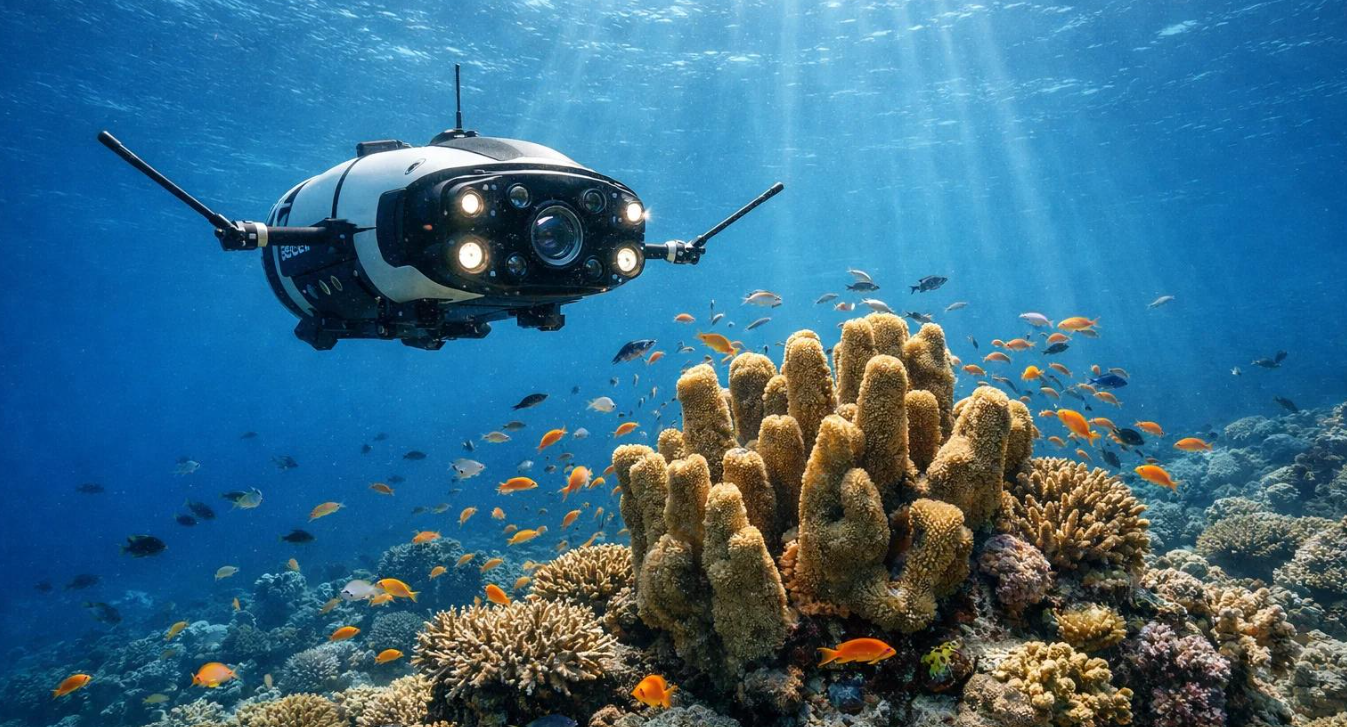
Underwater technology is gaining greater significance to comprehend and preserve marine ecosystems. Oceans are home to diverse marine life and are a key component in climate regulation. Pollution, global warming, habitat loss and overfishing pose serious environmental problems, though.
New exploration technology provides scientists with the means to survey coral reefs, explore the ocean floor, and track shifts in ocean life. Fragile ecosystems can be observed with underwater cameras and robotic vehicles without direct contact between the researchers and the environment.
The other exciting thing is environmental DNA (eDNA) technology. Scientists can also find and identify the species of those organisms that live in a given environment by collecting and analyzing the genetic material they leave behind in the water. This can enable researchers to identify marine biodiversity, including species that are hard to see.
The underwater sensors also help provide information on temperature shifts, ocean chemistry and water quality. These technologies can be used together to better detect environmental changes and create more effective conservation measures.
5. Advanced Sonar and 3D Ocean Mapping Technology
One of the more difficult tasks to get a grasp of in ocean exploration is understanding the ocean bottom. Most deep-sea environments are dark and can not be fully captured using traditional cameras. This can be overcome with the use of sonar technology which utilizes sound waves to identify objects and determine the boundaries of the sea floor.
A modern multibeam sonar system transmits sound waves into the sea bed and records the echoes from the sea bed. These signals can be used to measure distances underwater, determine geological formations, and produce comprehensive bottom maps.
Another important technology for locating objects and features under the ocean's surface is known as side-scan sonar. It can assist the researchers in finding shipwrecks, underwater obstacles, and unusual geological formations.
Digital imaging, geographical information system and 3D visualization systems are increasingly being used together with advanced mapping systems. These technologies enable scientists to obtain more detailed images of underwater conditions and assist in navigation, underwater research and monitoring of the environment.
6. Underwater Sensors and Communication Systems
Submarines and robotic vehicles are not the only things needed for modern undersea exploration. High-end sensors and communication systems are crucial to gathering scientific data and relaying it to scientists.
The underwater sensors can determine the temperature, pressure, salinity, water motion, oxygen level and more in the environment. They provide data for scientists to study and learn about ocean currents, shifting marine ecosystems, and the impacts of climate change.
Communication underwater is not as easy as communication in the air: Radio and satellite signals cannot be used in seawater. Therefore, acoustic communication, which sends information by means of sound waves over a limited distance, is commonly used in underwater systems.
Some submarines even have a lot of data that they collect during their missions and bring back to the surface after the mission. Some other systems transmit selected information via acoustic means whilst underwater.
Conclusion: A New Era of Ocean Discovery
Exploring deeper areas of the ocean is just part of the story for the future of underwater technology. It's all about learning new knowledge and saving marine ecosystems, and about understanding one of the most vital, and yet least understood, environments on Earth. The future of scientific discovery and sustainable ocean development will continue to be influenced by underwater technology, which is becoming increasingly important in the era of innovation.