

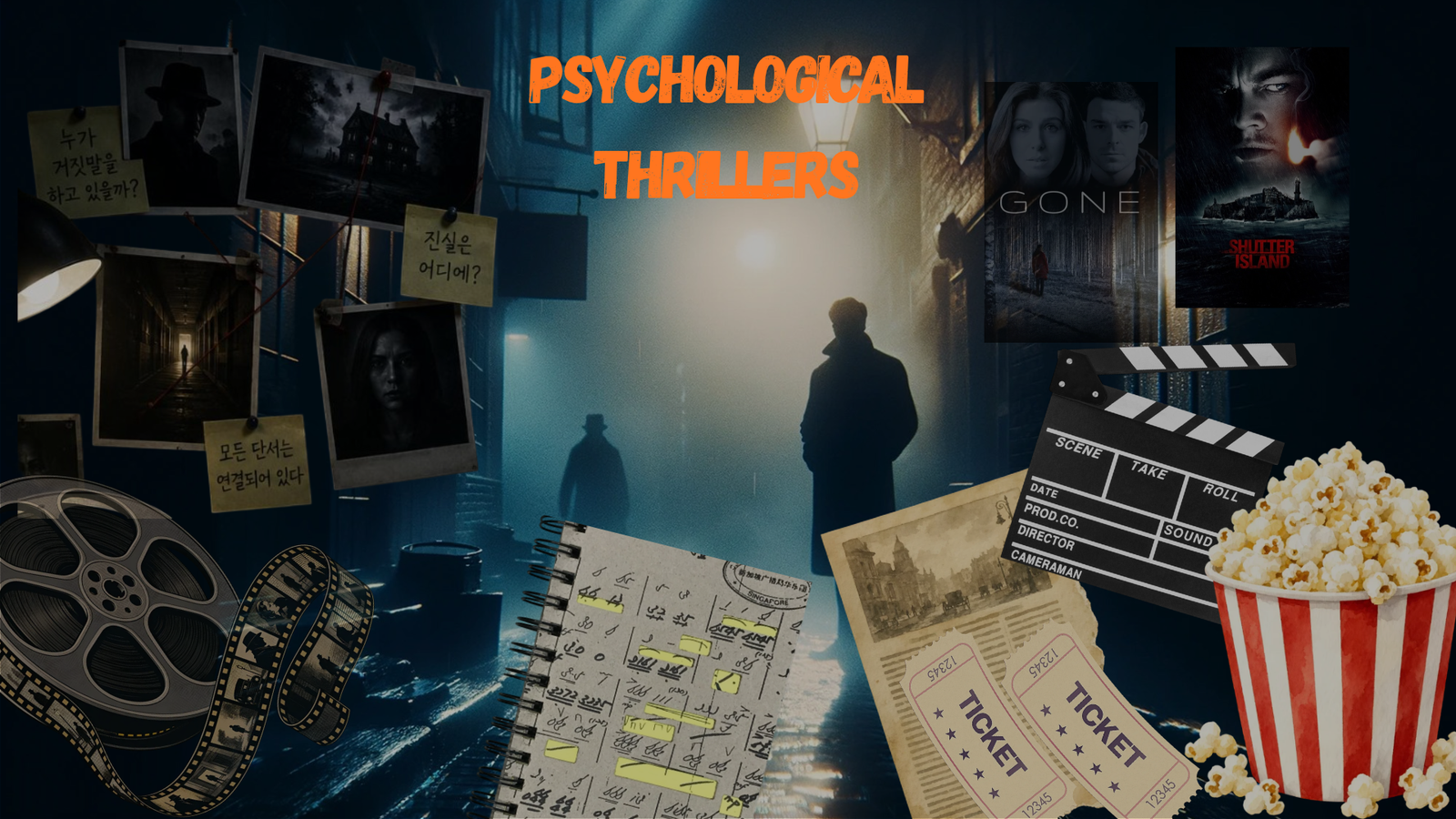
Psychological thrillers have made world cinema a place where the most dangerous threats can come from the human psyche, from psychological mind games and disturbing mysteries to unreliable narrators and dark human emotions.
Psychological thrillers are one of the most intriguing genres in films worldwide, enchanting viewers with suspense, terror, intrigue, and intricate human psychology. Psychological films don't focus on the action or physical threats, but rather on the psyche, feelings, recollections, compulsion, manipulation and the difference between reality and imagination. Whether it's classic Hollywood films or current Korean, European, Indian, and Japanese works, it has always changed and has always provided audiences with narratives which force them to question the truth of what they see and to think, long after the credits have rolled.
01 / A Research on the Beginnings of Psychological Thrillers
Psychological thrillers have a history of their own and can be considered to date back to the early days of filmmaking, when directors started to delve into the depths of suspense, paranoia, fear, and the intricacies of human nature. In the early and mid-1900s, however, psychological storytelling took center stage, as directors began to play with complex narratives, enigmatic characters, and surprising turns.
The roots of film noir were laid by films that were inspired by film noirs, crime dramas and expressionist cinema. The directors employed dramatic shadow play, unconventional camera shots, setting, and suspenseful narratives to build tension, rather than relying on constant action. These early films were the first to present stories that featured character's minds, secrets and emotions as the driving force for the conflict.
02 / Alfred Hitchcock and the Golden Age of Suspense is a City of Surprises, After All
Some other names that could not possibly have been left out are those of Alfred Hitchcock and Bernard Stiegler, both of whom have had an impact on the evolution of psychological thrillers, as they have turned suspense into an art form with their work. His films emphasized fear, uncertainty, guilt, secrets and the psychological fragility of normal human beings who find themselves in extraordinary circumstances.
Psycho, Vertigo, Rear Window and Rebecca were films that redefined the way audiences experienced suspense. Hitchcock knew that suspense could be greater than the actual surprise, and he packed unforgettable moments into the film using camera angles, sound, editing and the psychology of his characters.
His skills as a filmmaker, particularly as a storyteller, shaped the careers of countless directors around the world and spurred the evolution of psychological horror.
03 / The Rise of Psychological Thrillers in Global Cinema
Gradually, psychological thrillers made their way out of Hollywood and became an integral tradition in the art of cinema in other countries. The local cultures, social tensions, family relationships, traditions and personal struggles became a part of fear and psychological conflict stories in cinema.
South Korean film is known for its dramatic narrative, ambiguous moral setting and graphic revelations. Japanese cinema had created psychological mysteries in which certain themes of isolation, identity, memory, and disturbing human behavior come to the fore. Suspense, philosophical questions, complex character studies were brought by the European filmmakers, while Indian cinema introduced a new genre that combined psychological suspense with family drama, crime, social realities and unexpected twists.
This worldwide expansion put psychological thrillers on a new level on film, each industry offering a unique cultural slant to it.
04 / The Unreliable Narrator, Twist and Mind Games
One of the hallmarks of modern psychological thrillers is that they have the power to make the audience doubt what they see and hear. The unreliable narrator, the hidden identity, the split memory, the false perception and the unexpected twist have become all-powerful tools in the storytelling toolbox.
Audiences are duped by filmmakers in such ways as in Fight Club, Shutter Island, Gone Girl and The Sixth Sense who reveal information over time or through characters whose point of view may not be completely reliable.
These films prompt viewers to interpret, look for clues and re-think previous scenes. The experience is more than narration, it is a psychological puzzle in which the viewer plays a part in revealing the truth.
05 / The Impact of Media Streams and New Viewers
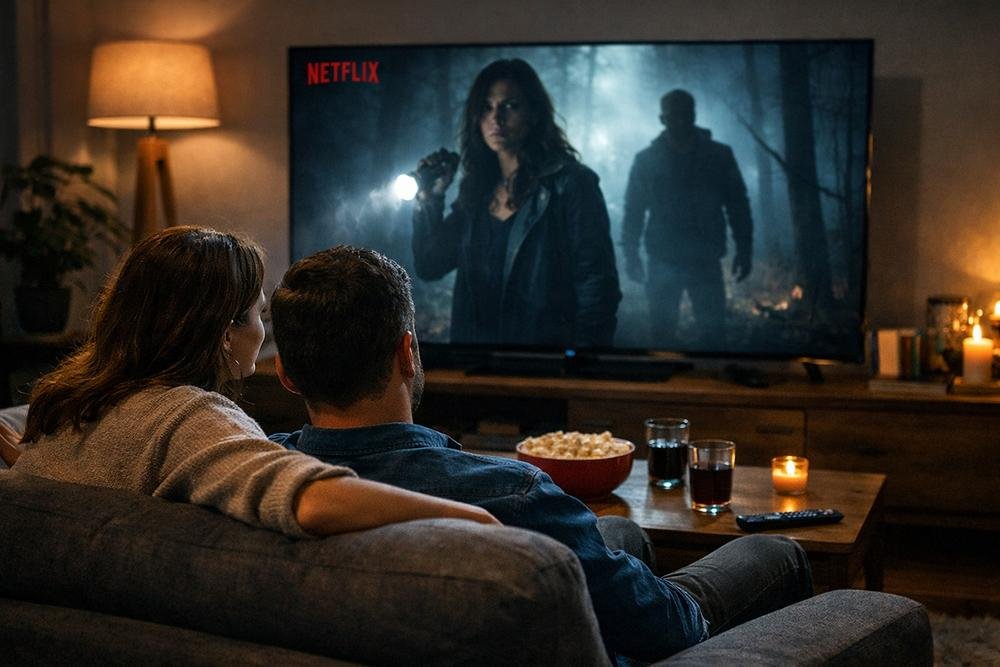
Streaming platforms have revolutionized the production, distribution, and consumption of psychological thrillers. Films and series from countries audiences might never have known about are now available to audiences worldwide, making psychological tales from the outside world reach audiences worldwide.
Streaming platforms have also enabled directors to test out slower storylines, unusual actors, gritty story ideas, and non-linear plots. Psychological thriller series can evolve the mystery across the series, allowing the audience more time to develop the characters, to discover secrets and enjoy suspense.
Psychological thrillers have carved out a niche for themselves in the global entertainment landscape, resonating with audiences who want to see the unexpected and experience the emotional rollercoaster.
06 / The Psychology Behind Fear, Obsession, and Human Behavior
The psychological thriller is a genre that delves into the human heart's feelings and inner tensions to reveal the unpredictable nature of the human mind. These films frequently feature a theme of fear, jealousy, obsession, guilt, trauma, loneliness, manipulation, and control.
Many modern thrillers feature morally complex characters with murky motives rather than two protagonists and two villains. Some stories touch on the way history influences people, others look at the effect of pressure, deceit or emotional instability on how people think.
The genre is both relatable and disturbing, due to this deeper psychological dimension. The scariest moments don't typically involve the supernatural or violence, but rather something that doesn't seem psychologically impossible.
07 / The Future of Psychological Thrillers in World Cinema
More experimental, international and immersive are likely to be the future of psychological thrillers. Digital identity, online manipulation, surveillance, loneliness, memory, social pressure and the emotional impact of contemporary living are becoming ever more popular themes in cinema.
New techniques in filmmaking, innovative sound design, immersive visuals and nonlinear storytelling will all continue to produce new methods of psychological tension. In parallel, new filmmakers from various nations are adding new cultural perspectives to the genre, making film worldwide more diverse than ever.
Psychological thrillers will always be a key genre for storytelling, suspense and emotional uncertainty, as audiences won't stop demanding it.
Conclusion
Specifically, the progression of psychological horrors in cinema around the world shows how fear, suspense and human nature are understood by the filmmakers. The genre has regenerated itself from the classic suspense of Hitchcock to the mind-bending plots of today's films, from abroad to streaming time.
Its greatest strength lies in its ability to turn ordinary emotions, personal secrets, and hidden thoughts into extraordinary cinematic experiences. Psychological thrillers do not simply entertain audiences—they challenge perceptions, create doubt, and reveal how complex the human mind can be.
As cinema continues to evolve, psychological thrillers will keep pushing creative boundaries, proving that sometimes the most terrifying stories are not about what is happening outside us, but what is happening inside our minds.