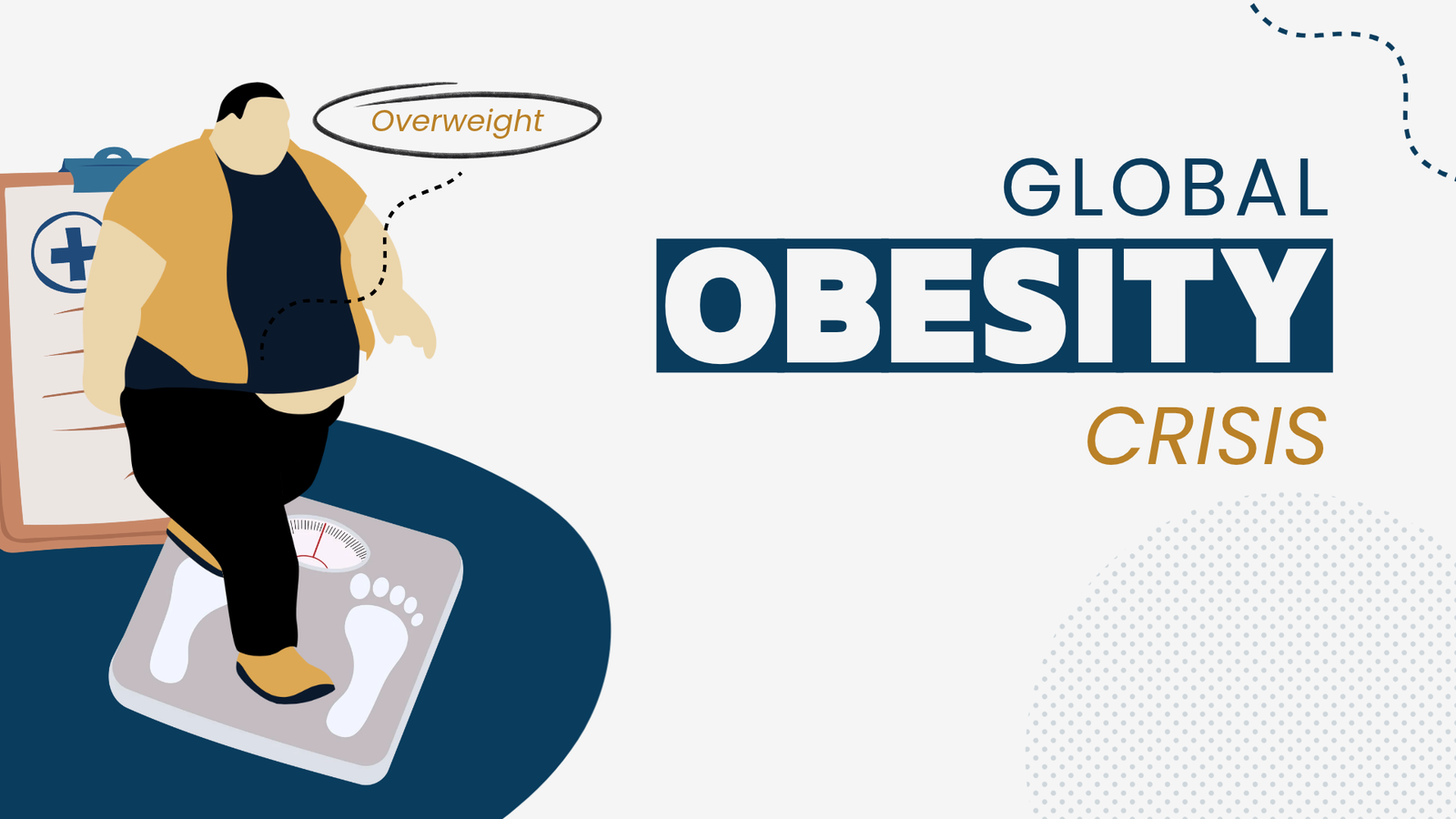
Obesity has emerged as one of the most significant public health problems of today's times. In all continents, the changing food patterns, more sedentary lifestyles, urbanization and social disparities are transforming people's lives and their eating behaviors. The once widely held view of weight as a personal issue is now seen as a multi-factorial, chronic condition that is rooted in biology, the environment and social factors.
As of 2024, the World Health Organization estimates that some 1.1 billion people around the world suffer from obesity. In fact, according to the same data, the rate of adult obesity has more than doubled since 1990, and the problem is significant.
The global obesity situation poses some serious questions regarding lifestyles, access to healthy foods, health care systems and the role of governments and communities. It is important to grasp these linkages if sustainable solutions are to be found.
1. Why obesity is now a global health challenge?
In the past, the primary focus of obesity often just meant individual dietary choices. Today, researchers increasingly recognise that the issue is much more complicated. People have to make decisions as a response to environments influenced by income, hours worked, transport systems, advertising and the availability of healthy foods.
There are plenty of places in many cities to grab a quick bite to eat and fewer places for people to find physical activity throughout the day if they need it, due to long commutes or work at desks and car-dependent neighbourhoods. Meanwhile, foods that are hyper-marketed and loaded with sugar, salt and fat can be cheap and readily available.
These can make it harder to maintain a healthy weight, even if you're trying to improve your lifestyle. Obesity is thus considered a chronic disease that has a biological, environmental, social and behavioural dimension by WHO.
However, the challenge is to not only motivate people to make good decisions; but to also help them to do so. Also to establish communities where all people have access to nutritious food, physical activity and appropriate health care.
2. The main causes of increased obesity rates
Increased consumption of processed foods, sugary drinks, and high calorie snacks, a decrease in physical activity, and changes in food patterns are all coinciding with the global increase in obesity. Body weight is also affected by genetics, hormonal fluctuations, some medications, stress and lack of sleep. Access to safe outdoor areas and opportunities for regular exercise could be a barrier to maintaining healthy habits.
Other factors, such as economics and social status, are also significant in obesity. Income, education, working hours and access to a healthy, affordable food and health care system may impact weight management. So, the issue of obesity is not just about will or choice. The key to good prevention and treatment is healthy habits, supportive environments as well as improved access to suitable health and mental health services.
3. Health risks of obesity
Excessive weight can lead to a number of health issues such as type 2 diabetes, heart disease, stroke, some cancers, joint pain and sleep apnoea. Extra body fat may impact insulin action, raise blood pressure, and add to joint stress.
Obesity can also impact mental and social health, as emotional distress and social isolation can result from stigma and discrimination related to weight. But there are individual differences in risk and not all obese people will develop these risks. With timely medical evaluation, timely treatment and proper health care, complications can be minimized and quality of life enhanced.
4. Childhood Obesity: The importance of early prevention

The importance of childhood obesity as part of the global health problem lies in the fact that behaviours and health status acquired in childhood may affect the health of adults.
WHO estimates that in 2024, some 400 million children and adolescents (aged 5–19) were living with overweight – of whom about 170 million were living with obesity.
Childhood environments affect children's health. All of this has an impact, including school meals, family eating habits, marketing, neighbourhood safety and sports and recreation opportunities.
Prevention efforts should be directed at helping children and not at shaming them for their weight. Nutritious meals and snacks at home and school, along with opportunities for fun physical activity, the promotion of healthy sleep habits and minimizing sedentary time can all help.
Medical practitioners also have to detect early on issues and offer age-appropriate, family-centered support. Assessment should be based on age and sex appropriate growth measures, as children are still developing, and BMI categories should not be used.
5. How the Global Obesity Crisis Affects Economies
Obesity is more than a medical issue. It also has broader economic and social repercussions.
More patients could be seeking diabetes management, cardiovascular services, joint treatment and other obesity-related services. While in the process, there can be additional health costs, less ability to move around, or problems with working and daily activities for people and families.
The World Obesity Atlas 2025 from the World Obesity Federation provides an indication of the mounting strain on health systems around the world and recommends for better access to obesity care and more robust obesity prevention policies.
The economic impacts can be inter-generational if childhood ill health impacts education, well-being and future opportunities. Therefore, investment in the prevention of disease and in the provision of affordable health care and better public spaces can help both communities and economies.
6. Global Solutions: What can the world do about obesity?
We need to make healthy food affordable, accessible and convenient, globally, to tackle obesity. Clear labelling and improved product quality can help governments and food businesses to encourage healthier food choice. A city can make pavements safe, open up parks and public transport and make more opportunities available for physical activity; a school and workplace can make more opportunities for physical activity. Steps to keeping children away from unhealthy food marketing, and supporting healthy eating habits from an early age, are also important.
Healthcare professionals can play a key role in prevention and management of obesity by early screening, tailored nutrition counseling, behavioral interventions, psychological counseling, and medical treatments if necessary. Ongoing support should be provided in line with the health needs of the person with obesity as this condition is frequently a chronic condition. Challenging weight-related stigma and discrimination, celebrating respectful healthcare and acknowledging obesity is multi-aetiological is also key. To make lasting improvements, individuals, families, healthcare professionals, businesses and governments need to cooperate with each other.
7. What the Future of Obesity Prevention Might Be Like

The effectiveness of countries in bringing together scientific evidence and practical public policy will determine the response to obesity in the future.
Researchers continue to gain insight into genes, appetite regulation, metabolism and how obesity is linked to other chronic diseases. Meanwhile, there is growing number of available treatments for those who meet criteria.
WHO's global response highlights healthier food environments, opportunities for physical activity and better health systems. It takes an approach which acknowledges that prevention and treatment should not compete, but be mutually supportive.
There will also need to be improved public-health information and sustained investment and inter-sectoral cooperation to progress. All schools, urban planners, food makers and health care providers could have a part to play.
Finally, the best strategies will be ones that make healthy choices simple, make treatment more accessible and do not demean the dignity of people impacted by obesity.
Summary: A Shared Responsibility for a Healthier World
Obesity is a worldwide problem that is an indicator of the dramatic shifts in how people eat, move, work and live. The underlying factors are not limited to behaviours, but go beyond to biology, economic conditions, food systems, urban design and health access.
A solution to this challenge must be a combination of sustainable personal practices and environments that promote good health. Solutions must involve the prevention of childhood, evidence-based medical treatment, and access to nutritious food and opportunities for physical activity every day.
Obesity is a complex, chronic condition, but early assistance and coordinated efforts can often have a positive impact on its health impacts. Individus, communities, healthcare systems, businesses and governments are responsible.
Better health outcomes are not going to be achieved through finger pointing and one-off solutions. It will be constructed by sound decisions and compassionate care, and a commitment to making health a possibility for all people.