

The marvelous nature landscapes found around the globe can be just as spectacular as the forces that formed them. The big mountains, the deep craters, black-sand beaches and rivers of hardened lava show us how much our Earth can change! Such landscapes are not only beautiful geologic features, but are also a reminder of the dynamic nature of the earth.
Volcanic regions are full of beauty, science and history from the volcanic islands of Indonesia to the steaming geothermal fields of Iceland. Other volcanoes are still active, and some have been inactive for thousands of years, creating spectacular scenery that attracts travellers, photographers and researchers.
These hikes offer an up-close perspective on the dynamic interplay of nature, humans, and the earth's powerful forces that are continually at work.
The Most Powerful Natural Landscape Creators on Earth!
Volcanoes are one of the strongest forces that formed the surface of the earth. They are formed when molten rock, gases and ash emerge from beneath the earth's surface, sometimes forming huge mountains and sometimes new land.
Repeated volcanic eruptions can result in huge plateaus, deep craters, rugged mountain ranges and odd-shaped island formations over thousands or even millions of years. Once the lava cools, it forms new geology, which over time is modified by erosion and weathering.
Here too are also interesting ecosystems that thrive. In some volcanic areas, the soils are very fertile, and vegetation grows and agriculture can be developed around them. This may seem like a tough place to be, but it can also become a vital natural habitat.
The Pacific Ring of Fire: A World of Active Volcanoes
One of the most amazing geologic regions on earth is the Pacific Ring of Fire. It is a large area around much of the Pacific Ocean that is home to many volcanoes and earthquakes. Its volcanic activity is associated with the movement and interaction of tectonic plates.
This larger volcanic belt encompasses countries like Japan, Indonesia, New Zealand, the Philippines and Chile. Their scenery features steep volcanic mountains, archipelagoes, geothermal regions and extensive geologic depressions.
The area illustrates the effects of tectonic forces on shaping continents and ocean floors. It is also a significant scientific region as volcanic activity monitoring can help in better understanding the geological hazards and thus enhance the early-warning systems.
1. Iceland: Where Fire and Ice Create Extraordinary Scenery

The combination of active geological forces and vast glaciers in Iceland makes it one of the world's most intriguing volcanic destinations. The country is also volcanic and geothermal, along the Mid-Atlantic Ridge.
You can find a lot of lava fields, volcanic craters, steaming hot springs and rugged mountains. The volcanic landscape of the Reykjanes Peninsula and around Lake Mývatn shows the incredible variety of the geological setting in Iceland.
The dark volcanic rock, white glaciers and coloured geothermal soil provide a landscape that seems like another world. Geothermal energy also plays an important role in Iceland's everyday life, providing a valuable source of renewable heating and electricity.
Iceland demonstrates the volcanic activity effects on the landscape, energy generation, the development of communities and tourism.
2. Hawaii: Volcanic Islands Born from the Ocean

The Hawaiian Islands are one of the purest examples of new land created by volcanic activity. The islands are a result of volcanic activity over a hotspot beneath the Pacific Plate and are dominated by giant shield volcanoes, coastal lava outcrops, and lava landscapes that have been formed by numerous eruptions.
Kīlauea and Mauna Loa, two of the world's most renowned shield volcanoes, are located on the Big Island of Hawaii. Their broad volcanic structures are unlike the steep cone-shaped mountains that are often linked to explosive eruptions.
Hawaiʻi Volcanoes National Park provides a glimpse into the history of the Hawaiian Islands in the craters, lava formations and protected natural areas. There are a number of trails for visitors and observation areas to explore, and an educational program about the ongoing influence of volcanic activity on the island.
Hawaiian volcanic landscapes are also culturally significant to Native Hawaiians, in addition to their geological significance.
3. Indonesia: Dramatic Volcanoes and Spectacular Island Landscapes
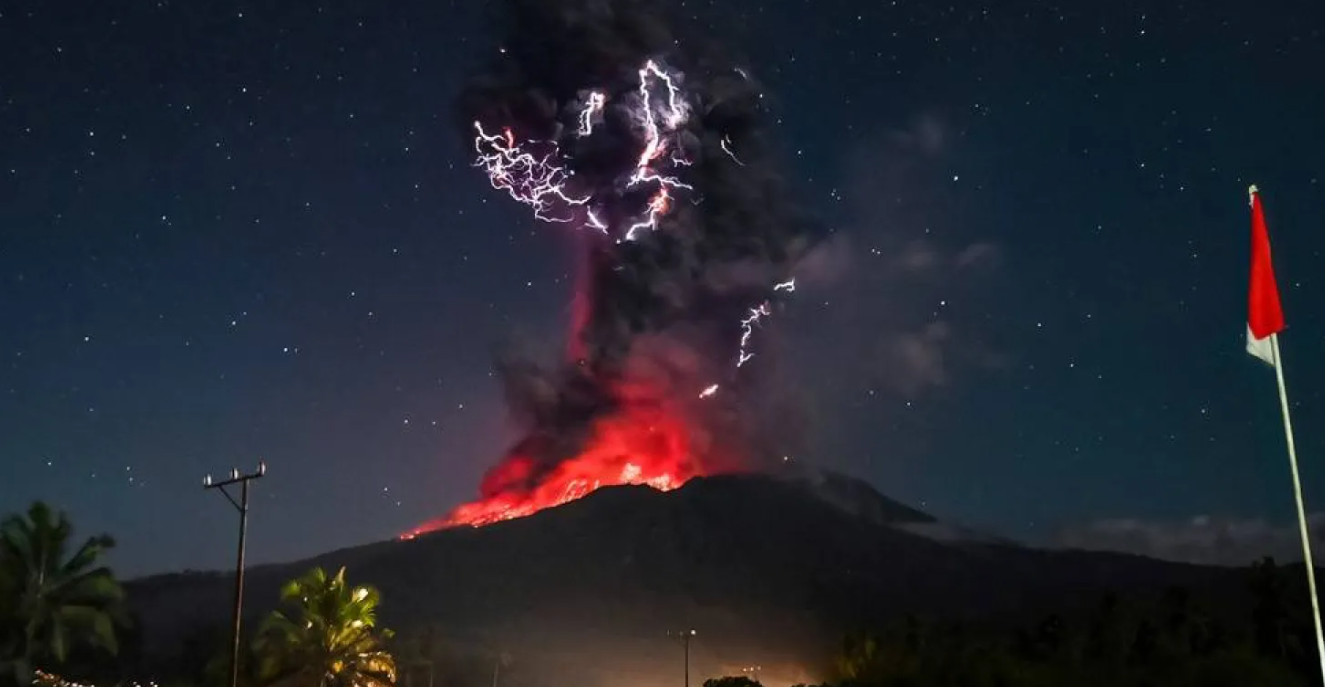
Indonesia is a very volcanically active country, with hundreds of volcanoes scattered across Indonesia's vast island chain. It is found in the Pacific Ring of Fire region, so it is a part of the country's natural environment.
The dramatic scenery of Mount Bromo, East Java, with its smoking volcanic crater that stands over a huge expanse of sand, is especially popular. One of Southeast Asia's most distinctive natural scenes is defined by the surrounding mountains.
Mount Ijen is also a fascinating place, home to a volcanic crater lake and geothermal activity. It's not blue lava, but burning sulfur gases that create its distinctive blue flames that can be seen in darkness under appropriate conditions.
The volcanoes in Indonesia have an impact on agriculture, tourism and local traditions. Meanwhile, the communities adjacent to the volcanoes are constantly under threat from various volcanic hazards, making monitoring and preparations a necessity.
4. Italy: Ancient Volcanoes and the History of Civilisation

There is a great mix of volcanic scenery and ancient history and modern life in Italy. Its Mediterranean landscape has some remarkable volcanic systems: Mount Etna in Sicily, Mount Vesuvius near Naples and the volcanic islands of the Aeolian archipelago.
One of the most active volcanoes in Europe, Mount Etna has modified the area with eruptions and lava flows several times. It is a geological and nature tourism site due to its variable slopes, volcanic craters and fertile agricultural lands.
Mount Vesuvius is famous throughout the world for its eruption that covered the Roman towns of Pompeii and Herculaneum in AD 79. The archaeological remains offer a fascinating glimpse into the life of ancient Romans and into the devastation of volcanic eruptions.
The volcanic areas of Italy show how the forces of nature and man's history can be intertwined over the course of many centuries.
5. Chile and the Andes: Volcanoes among the highest mountains in the world

Chile boasts an amazing collection of volcanoes, many of which stand along the Andes Mountains. The country's long, narrow topography and location on the western side of South America give the country an extremely tectonic environment.
Volcanoes such as Villarrica and Osorno are particularly well known for their striking mountain scenery. Villarrica is an active volcano near the city of Pucón, while Osorno is famous for its symmetrical cone and snow-covered summit.
Further north, the Atacama region features high-altitude volcanic formations, colourful mineral landscapes and some of the world's most dramatic desert scenery.
These volcanic environments are important for biodiversity, tourism and scientific research. They also highlight the geological diversity of the Andes, where towering mountains, glaciers, deserts and volcanic formations exist within the same broad region.
Conclusion: Nature's Power Creates the World's Greatest Wonders
Volcanic landscapes are among the most impressive examples of the Earth's ability to create and transform its own surface. From Iceland's dramatic combination of fire and ice to Hawaii's ocean-born islands, Indonesia's active volcanic peaks, Italy's historic craters and Chile's towering Andean volcanoes, every region tells a different geological story.
These destinations are more than spectacular travel locations. They provide valuable insights into tectonic activity, the formation of new land, ecosystem development and the relationship between natural environments and human civilisation.
However, their beauty also comes with responsibility. Volcanic regions can be unpredictable, and visitors must respect safety instructions, follow official warnings and explore only permitted areas.