
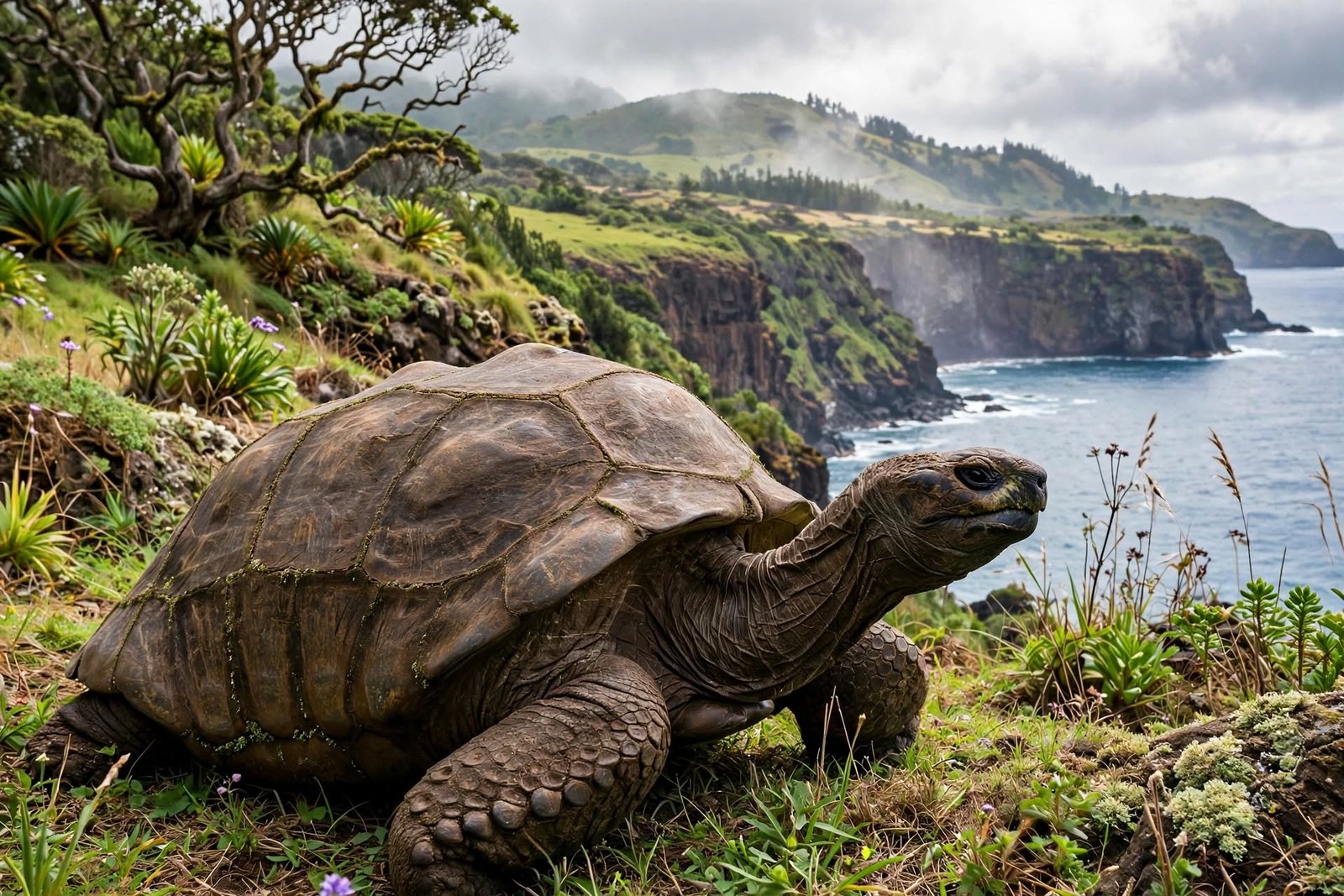
Could the secret to a longer, healthier life be hidden in the DNA of a tortoise born nearly two centuries ago? Scientists studying Jonathan, a giant tortoise estimated to be 194 years old, believe his remarkable biology could offer valuable clues about ageing and longevity.
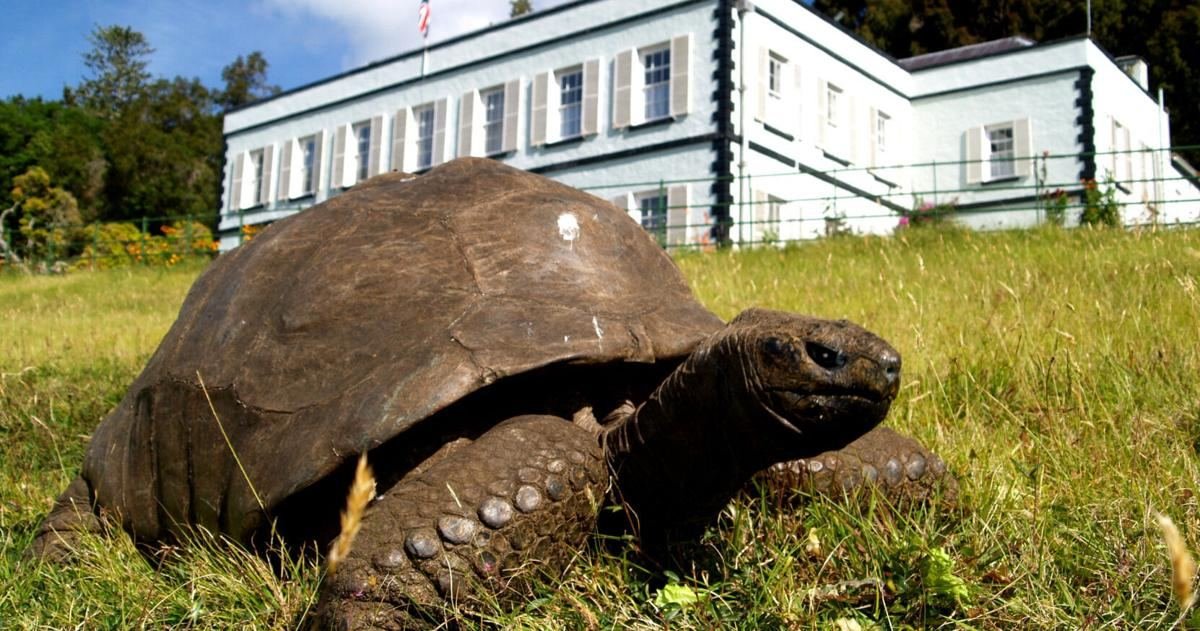
Jonathan is an Aldabra giant tortoise who lives on the island of Saint Helena in the South Atlantic. Believed to have hatched around 1832, he lived during the era of Charles Darwin and Queen Victoria. Now recognised as the world’s oldest known living land animal, Jonathan has become an extraordinary subject for researchers investigating why some living creatures age much more slowly than others.
What Did Scientists Discover in Jonathan’s DNA?
In a study published in October 2026 in the journal Science Advances, an international research team analysed Jonathan’s genome and epigenome to investigate the biological factors that may explain his exceptional lifespan.
The researchers identified 287 genetic variants unique to Jonathan among the animals compared. These variants were associated with biological processes linked to longevity, including DNA repair, inflammation control, insulin regulation and cancer suppression.
Scientists also examined epigenetic markers — chemical signals that help determine when genes are switched on or off. These markers can change as an organism ages, sometimes disrupting the normal activity of important genes.
Remarkably, certain regions of Jonathan’s DNA showed patterns that remained similar to those found in much younger tortoises. These regions were associated particularly with mitochondrial function and RNA processing, both essential for maintaining healthy cellular activity.
Could His Cells Hold the Key to Slower Ageing?
Mitochondria are often described as the powerhouses of cells because they help produce the energy the body needs to function. As organisms age, mitochondrial performance can deteriorate, contributing to cellular damage and age-related diseases.
Jonathan’s genetic and epigenetic patterns suggest that some of the systems responsible for cellular energy production and DNA maintenance may have remained unusually stable throughout his long life.
This does not necessarily mean that Jonathan has escaped ageing altogether. He experiences age-related problems, including cataracts. Instead, the findings suggest that certain protective biological mechanisms may help explain why his body has remained functional for so long.
What Does This Mean for Human Longevity?
Jonathan’s story could eventually help scientists understand biological ageing in humans. If researchers can identify how long-lived animals maintain effective DNA repair and cellular function, they may discover new ways to investigate age-related diseases.
However, there is an important limitation: Jonathan is one exceptional animal, and the study compared his biological data with only a small number of other tortoises. Further research is needed to confirm the findings and determine whether similar mechanisms could be useful in human medicine. Scientists have not discovered a proven method for extending human life based on Jonathan’s DNA.
A Remarkable Animal, and a Promising Scientific Clue
Jonathan may not provide a simple formula for living longer, but his DNA offers a rare opportunity to study ageing across an extraordinary lifespan.
His greatest contribution could be helping scientists understand how the body maintains its essential functions over time. For now, the secret to a longer human life remains unresolved — but Jonathan’s remarkable journey is giving researchers new questions to explore.