The human brain is an extremely complex and amazing organ in nature. It is the reason we think, remember, feel and move, and it gives us the ability to comprehend the world around us. Though decades of scientific inquiry have been undertaken, the brain is still mysterious.
Neuroscience is now on a new frontier. New knowledge of brain development, learning, adaptation and disease response is now being explored with advanced brain imaging, neural mapping, brain–computer interfaces and discoveries of brain plasticity. All these advances are presenting new opportunities in healthcare, rehabilitation and understanding human behaviour.
But what are the most significant findings that are changing neuroscience now? What are some of the research areas that could revolutionize the medical field and what new innovations could shape the future of brain research?
In this article, we explore the developments, opportunities and challenges shaping the next generation of neuroscience and brain research.
1.Understanding the Science of the Human Brain
Neuroscience is the study of the brain, spinal cord and nervous system, all in science. It unites biology, psychology, medicine, chemistry, physics and engineering to gain an understanding of how nervous systems work.
The brain is made up of billions of neurons (nerve cells) that send signals in the form of both electricity and chemicals. These neurons function with other cells, such as glial cells, which assist in maintaining the health of the neurons and a proper environment for brain activity.
Biologists investigate the mechanisms by which brain networks enable us to learn and remember information, comprehend our emotions, make decisions, engage socially, process sensory information, move our bodies, and focus our attention, awareness, reasoning and thinking.
The knowledge of these processes is not only relevant to understanding human behavior, but also to developing improved methods for neurological and psychiatric diseases.
The study of the brain has moved to several levels, from the cell to molecular to neural circuits and brain networks, in recent years.
2. Major discoveries that are changing neuroscience
Researchers have come to a new understanding of the brain as a result of scientific advances. It is now studied as a dynamic system which can adapt, reorganize and respond to changing experiences rather than a fixed organ with fixed functions.
The brain's ability to grow, develop, or change in response to learning, experience, and/or damage is referred to as neuroplasticity. It aids in the acquisition of new skills, adaptation to new environments and restoration of some functions following neurological injury. Studies are ongoing to investigate the role of brain connectivity in learning and recovery. Practice and training can facilitate rehabilitation in some cases, but not in all; not all functions may be regained.
Brain mapping is used to understand how neurons connect and communicate in the brain. Scientists can now identify different types of cells, trace neural pathways and see how cells within the brain are active. Brain circuits regulate perception, memory, movement and behaviour – this is a field in which the US National Institutes of Health BRAIN Initiative can support research.
Brain cells and neural circuits are being investigated under various conditions like Alzheimer's disease, Parkinson's disease, epilepsy and other neurological diseases. The detailed maps of the brain could lead scientists to understand more about how these diseases develop, help identify which cells are affected, and lead to the development of possible treatments. A number of new treatments are still being tested, however, before they can be used in normal medical care.
3. Brain–Computer Interfaces: Linking Minds and Machines
The brain–computer interface is one of the most promising fields of modern technology involving the brain. These systems are able to recognize patterns in the neural activity and to convert those patterns into signals understood by computer or another system.
BCIs are also being explored for use in clinical research to restore communication and interaction for individuals with severe motor disabilities.
For instance, someone that is unable to speak due to a neurological injury could be able to form patterns of brain activity to create a text or speech via a specialised neural interface. Other experimental systems are intended to provide control of computer cursors, robotic arms or other assistive devices.
Advances in neural decoding are also being reported in 2026, such as development of communication restoration and interfaces closer to users' intended speech and actions.
4. Neuroplasticity, Learning and Memory
How is language learned, an experience remembered or a new skill acquired? The science of neuroscience indicates that these abilities rely on the strengthening and structuring of connections between neurons and synchronised activity between networks of neurons.
Learning isn't just about putting information in one place. The brain has different systems for different kinds of memory, and recall requires the interplay between neural activity and what has happened before, as well as in the context in which information was acquired.
Scientists investigate mechanisms of strengthening and weakening of links between nerve cells, which enable the brain to learn and remember. They examine the mechanisms underlying the way experiences are encoded and retrieved; the changes in the brain over the course of life; and the role of repeated practice in the recovery of some function following stroke or other neurological trauma.
The results are of practical significance for education and skill development and rehabilitation. They also illustrate the need for careful consideration of learning strategies; there are no strategies that are guaranteed to result in better memory for any person or for any learning task.
5. Mental Health and the Future of Neuroscience
Mental health research is another field that is of great importance in neuroscience. Depression, anxiety disorders, schizophrenia and post-traumatic stress disorder (PTSD) are complex disorders that are caused by interacting processes in the brain, genes, life experiences, social environments and physical health.
Researchers are trying to understand biological processes in these conditions, and to acknowledge that brain activity is not the only explanation for mental health.
Another key field of neuroscience is mental health research. Depression, anxiety disorders, schizophrenia and post-traumatic stress disorder are all complex disorders that are linked to brain function, genetics, life experiences, social environments, and physical health.
Researchers are trying to gain a better understanding of the biological mechanisms underpinning these conditions and acknowledging a role for brain function beyond mental health conditions.
The search for personalised treatment using biological markers is underway to help determine which potential therapies are best suited to each individual patient. They are also learning about non-invasive brain stimulation methods, which are already being used for some conditions, such as some types of depression, and transcranial magnetic stimulation. Scientists are also exploring the relationship between the brain, the immune system, hormones, sleep, and other bodily functions to gain insights into the brain's role in mental and neurological health.
The future of mental health neuroscience will rely on the ability to make reliable research accessible and evidence-based care. Biological results must be used in addition to, not in lieu of, psychological, social and clinical approaches.
6. Alzheimer's Disease, Parkinson's Disease and Neurodegeneration
Neurodegenerative diseases involve damage to the structure and function of the nervous system – and are often chronic (lasting/ongoing). Alzheimer's disease may cause memory and thinking problems, Parkinson's may cause problems with movement, balance and other functions.
With many populations ageing today, the study of these conditions is a key concern in neuroscience and healthcare research.
Scientists are investigating how brain cells, proteins, genes, and other biological markers change, in order to better understand the onset and development of neurodegenerative diseases. They are seeking methods to identify the diseases at a much earlier stage, to safeguard vulnerable neurons and to create more targeted drugs that will be able to penetrate to the brain more efficiently. Researchers are also studying how various brain cells may change as we age and why some age more strongly than others, which can lead to damage. While significant progress has been made, there is a great need to find ways to preserve independence and quality of life.
7. Ethical Issues on Current Neuroscience
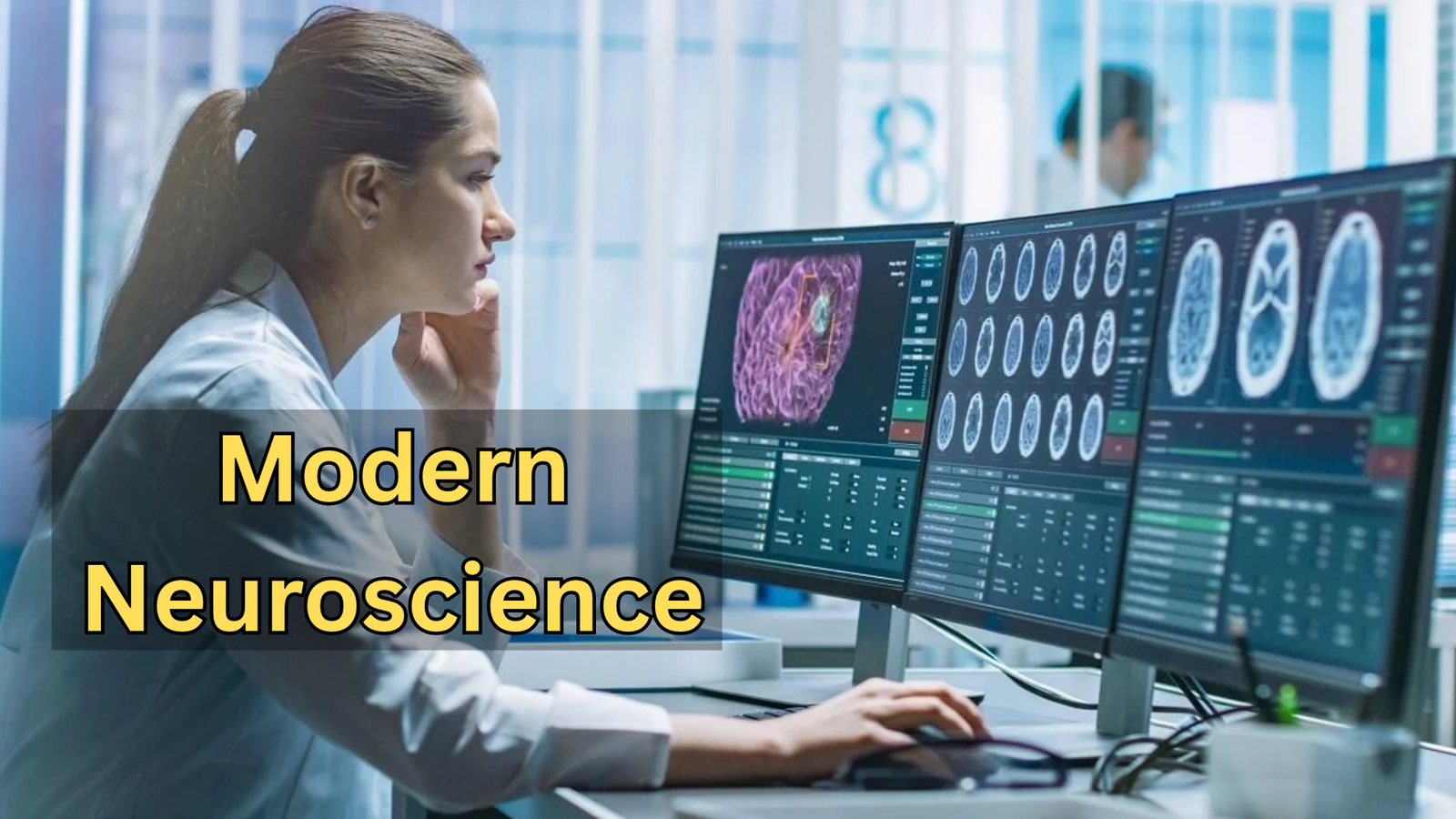
Neuroscience is developing and important questions are being raised with regard to privacy, consent, safety, and the responsible use of technology.
Neural data can contain information about a person's brain activity and in a few cases, about their health or behaviour. It highlights the need for safeguarding data related to the brain in particular.
Ethical issues in neuroscience involve safeguarding mental privacy and responsible use of neural data. Scientists need to gain informed consent, be safe with new technologies, and bring advanced treatments to the masses. They need to present the results of research truthfully without embellishment or promise of results that have not yet been substantiated by scientific evidence.
These questions are even more relevant in the context of brain–computer interfaces, which link neural activity to external digital systems. As the technology develops, researchers and policy makers must think about how consent and control of the data and long-term user protection can be maintained.
In responsible innovation, scientific advances must be coupled with robust protections, open debate and engaging involvement with the stakeholders impacted by these technologies.
8. What is next in Neuroscience?
Future research in the brain will probably be guided by findings in various fields of science. The study of single cells, regions or behaviors is increasingly being replaced by a more integrated view of how the nervous system functions.
New maps of the brain, more targeted treatments for neurological disorders, better brain–computer interfaces for people with severe impairments to communicate and to control actions of their brains could be what neuroscience research will bring for the future. Researchers are also creating smarter models of the human brain to investigate diseases and test the efficacy of treatments. Further advances in understanding the brain's functions could come from greater collaborations, more reliable sharing of data and better research techniques.
Directions for research, not sure results. Success will rely upon reproducible evidence, an ongoing commitment to investment, successful clinical trials, and careful risk and benefit assessment. A key objective is the linkage of the basic understanding of neural circuits to enhanced human health.
9. How Neuroscience can Transform the Way we Live Our Lives Everyday
Neuroscience's effects go beyond hospitals and research labs. With further research into the brain, scientists could impact education, rehabilitation, workplace wellbeing, and healthy ageing.
The applications of neuroscience research to learning, healthcare and rehabilitation after brain injury positively impact education.Applications of neuroscience research to education improve learning, healthcare include earlier diagnosis and targeted treatment, and rehabilitation following brain injuries is improved. It can also help people stay cognitively healthy during aging and improve assistive technologies that make it easier for disabled people to interact with the world and their digital devices.
But scientific discoveries should be carefully applied to the practical world. Findings from the lab do not necessarily reflect the effectiveness, safety or cost of a technique to everyone.
The most impactful change will be when good discoveries are followed by positive results in people's lives.
Venturing into a new era of brain discovery
The knowledge gained from neuroscience and brain research is helping us to better understand one of nature's most complex systems. These are just a few of the new methods used to explore the workings of the brain and potential treatments for neurological disorders, such as neuroplasticity, memory, brain mapping and brain–computer interfaces.
The synergy of modern imaging, cell-biology, and neural recording and computation holds out the promise of many exciting discoveries going forward. In parallel, big questions regarding consciousness, memory, mental illness, and neurodegeneration have yet to be answered.
The future of neuroscience will be defined by advances not just in technology, but in science and ethics as well, and by the need to translate neuroscience research into new and better therapies.
Finally, an understanding of the brain is more than simply the study of the biological mysteries. It is the improvement of health, the support of independence and the gaining of understanding of what makes human experience possible.