We have come to a new age in education. Classrooms are evolving, digital learning is growing and students from all over the world are learning new ways to build knowledge and skills. Previously textbook, classroom, and personal instruction-based teaching has been increasingly flexible, interactive, and connected. Whether it's online universities or immersive learning experiences, innovations are transforming the future of education and how people learn, teach, and prepare for what's next.
Education is always and everywhere has been a central pillar of social and economic development. However, in today's society, the expectations of educational systems are changing. Students must also be creative, critical thinkers, be literate in using technology, communicate effectively and be prepared to adjust to new situations. New ways are being pursued by governments, schools, universities, educators and technology firms to satisfy these needs.
The change is taking place around the world, but not necessarily uniformly. Some schools are testing out sophisticated digital classrooms, while others are just trying to get the power on, internet connections and adequate learning resources. A knowledge of these global processes helps to illuminate the future direction of education and what opportunities and challenges lie in that direction.
Changing Landscape of Global Education
The education system for centuries had been pretty much the same. Teachers gave instruction, students read books and took tests to check their learning. This is still a vital method, but modern schools are also seeking alternative practices with a stronger focus on participation, flexibility, and real-world understanding.
The development of international communication, the transformation of working life and the impact of technology have prompted institutions to question their pedagogical approach. It is now possible for students to study courses offered by universities in other nations, to be a part of international projects, and to study subjects not offered in their local schools.
Meanwhile, education is growing in relevance outside of childhood and higher education. Adults going back to education to change career, gain tech skills or brush up their skills. This change is contributing to the creation of a culture of lifelong learning where life-long learning is seen as a continuous learning process and not just a learning journey that ends at graduation.
The challenge is to determine how to ensure that these new opportunities are available to learners from various economic backgrounds and geographical regions. Innovation will not be the only factor in defining the future of education; how educational systems can make learning accessible, relevant and affordable will also be a key component.
Digital Learning is Going to Break Traditional Boundaries
The use of digital learning is one of the biggest advances in learning today. Students can use online learning, online education sites, virtual classrooms and virtual libraries as means to obtain information, without being bound by their physical location. A learner in a remote community can learn subjects from international teachers and a university student can participate in the selected subjects online.
This flexibility has altered the links between learning, location, and time. Students can revise lessons that have already been recorded, download study materials, do interactive exercises, and take a look at concepts that are difficult and repeat them at their own pace. Digital resources can also assist teachers in explaining difficult concepts, via video, animation, simulation and demonstration.
Online education has become especially useful for those who are unable to attend traditional educational institutions due to physical access, geographical barriers, family responsibilities, and/or employment obligations. It can also be used by institutions to increase reach without having to have all students on campus.
Digital learning, however, is not always effective as a technology-based approach. Students require stable Internet access, appropriate devices, organized learning materials and access to teachers and other students. Successful digital education is a mix of ease of technology and purposeful instruction, feedback and connection with humans.
The student experience is changing with the dawn of personalized learning
All students are different and learn in different ways. Some learn new concepts easily with pictures, others learn by reading, discussion, repetition, or doing. In traditional classrooms, teachers may be limited in the amount of time available to address all learning styles in a classroom, particularly if dealing with large groups.
Personalized learning aims to overcome this challenge by tailoring learning activities to the needs, abilities, interests and progress of each student. Digital platforms can be used to provide extra work when the concept is difficult or help to assess when it has been mastered, and to extend or challenge when the concept is well understood. Assessment results can be used to inform teachers about learning gaps to provide targeted support.
This can help make learning more responsive and help build confidence. Mistakes are not just failures; they can be an opportunity for educators to gain insights into where there's more to be explained to learners. Students can also be provided with more opportunities to take charge of goal setting, tracking progress and determining what needs improvement.
However, personalization does not imply a divide between the screen and the person, nor should technology be used to make all decisions for education. Humans are still needed to guide. Expect teachers to interpret learning outcomes, consider students' context and make informed decisions on required support.
Best practice in personal learning environments includes having personalized learning experiences and opportunities to work together with others, so that students learn both how to learn independently as well as how to learn with others.
Time to introduce Artificial Intelligence and new role of Educational Technology
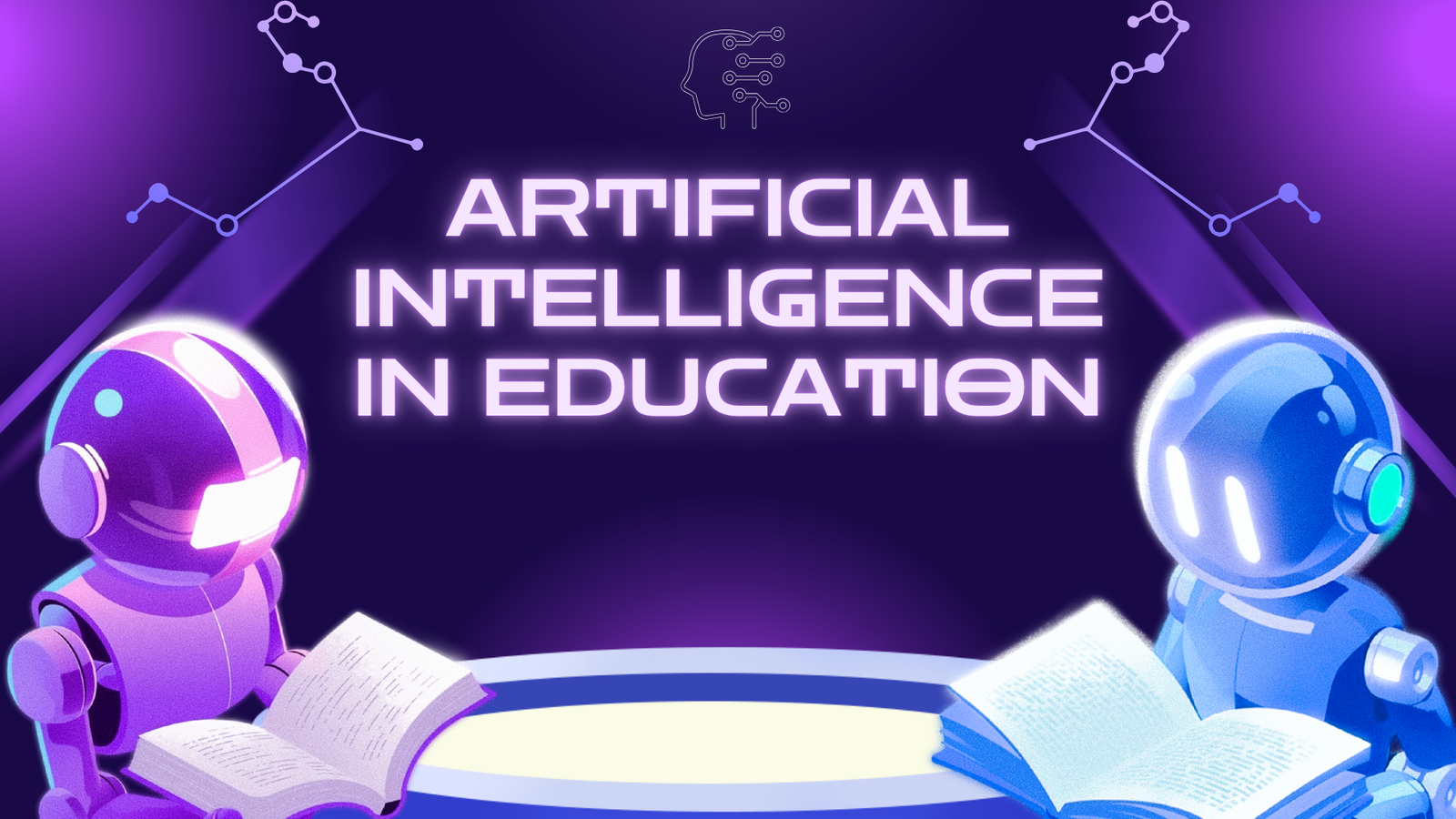
The advent of AI is increasingly at the center of education discourse. AI tools can help with practice exercises, language learning, feedback, research, and explaining hard-to-understand concepts. These tools can also enable teachers to build lesson plans, create variations of examples, and adjust activities to varying levels of learning.
These technologies can offer more opportunities to students for them to ask questions and learn about topics outside of school hours. For instance, a language learner can have a conversation with a digital tutor, a mathematics student can get step by step explanations of a problem.
However, there are significant questions to consider regarding the increasing use of AI. Automated systems can also generate inaccurate information or bias in the training data or give answers without a sufficient context. Over-reliance on generated answers could limit students' opportunities for the development of independent thinking and problem-solving.
Schools and universities must therefore have clear guidelines regarding academic honesty, privacy, proper use, and the checking of information. Students should know how to check digital answers but also not take all answers as correct.
Technology should be used to assist in the teacher/student relationship; it should not be a substitute for the relationship. Judgement, empathy, encouragement and subject expertise are essential to meaningful learning.
The Rise of Hybrid and Flexible Education
The boundaries between face to face and online education are blurring. Hybrid education is a system in which face-to-face teaching is integrated with online teaching. It is a method of education in which teaching content and teaching models are flexibly selected according to the needs of the subject or the student group.
For a hybrid classroom, the students may engage in an in-person discussion, an online assignment, and view a recorded explanation and then participate in a virtual group project. Campus experience and online teaching can be integrated in universities and flexible working schedules provided for professionals in training.
In this model education is more flexible. Extension of learning time can be accommodated by students accessing digital materials to review topics when they require more study time, and classroom discussions, practical and questioning activities can be used to engage students when these activities would be better suited for a direct interaction.
International cooperation is also a possibility with flexible education. Research projects can be shared with students from other countries, as can opinions and ideas, opening up an opportunity to gain a better understanding of cultures other than one's own.
But there is a need for careful planning when it comes to hybrid learning. It is essential that institutions ensure that online learners are not at a disadvantage, that online materials are accessible, and that teachers are provided with suitable training. Effective teaching in a blended teaching model is not just the traditional teaching model shifted to the screen but a program that is scientifically designed to integrate the advantages of various teaching environments.
Skills Based Learning and the Changing World of Work
The world is changing with the economy and educational institutions are increasingly facing calls to educate their students for jobs that may be very different from those of the past. The knowledge, problem-solving, communication, and interpersonal skills are becoming increasingly important to employers.
Consequently, there is increasing focus on skills-based learning. This model does not focus solely on students memorizing facts and learning but rather to students' performance of what they are able to do. Classroom knowledge can be connected with some real challenges through projects, practical assignments, labs, internships, presentations, and real world case studies.
Technology has affected almost every industry and it is important to develop digital literacy. Knowing how to use digital tools responsibly, to assess online content, how to keep personal information safe and how to identify potential security risks is beneficial to students.
Financial literacy, entrepreneurship, environmental awareness, teamwork and critical thinking are other useful skills that can be developed. These skills can assist students in making choices and handling new situations.
Vocational education and apprenticeships are also very important. They provide hands-on access to careers like engineering, healthcare, construction, manufacturing, hospitality, and renewable energy. Growing linkages between school, university, training centres and employers can help to ensure that education programmes remain relevant while avoiding a job-for-jobs mentality.
Equality and Equal Opportunities for All Learners
The question that has been posed on education's future is whether it will be enjoyed by all or not. Students in other countries around the world encounter a variety of challenges other than household income, disability, language, gender, conflict, geographical isolation and availability of qualified teachers.
Digital resources can help address some of these issues by offering digital access to alternative formats, remote learning, translation, etc., and flexible learning opportunities. When assistive technologies are designed and used properly, they can help students with visual, hearing, physical and/or learning disabilities.
Change is more than technology in inclusive education. Schools must have access to buildings, facilitating teaching methods, suitable learning resources, appropriately trained staff and policies that will ensure students are not subject to discrimination. Schools also need to ensure that the family and community are engaged in the development of a climate that respects and provides support for all learners.
Language is another important consideration. Learning materials are frequently taught in the most popular languages, making it more challenging for students with other home languages. To help close this gap, content and teaching strategies should be locally relevant and use multiple languages.
Equal educational opportunity does not mean equal resources. It requires an understanding of the various contexts and the provision of appropriate assistance for learners to engage, advance and perform to their maximum capacity.
Teachers are still at the core of educational innovation
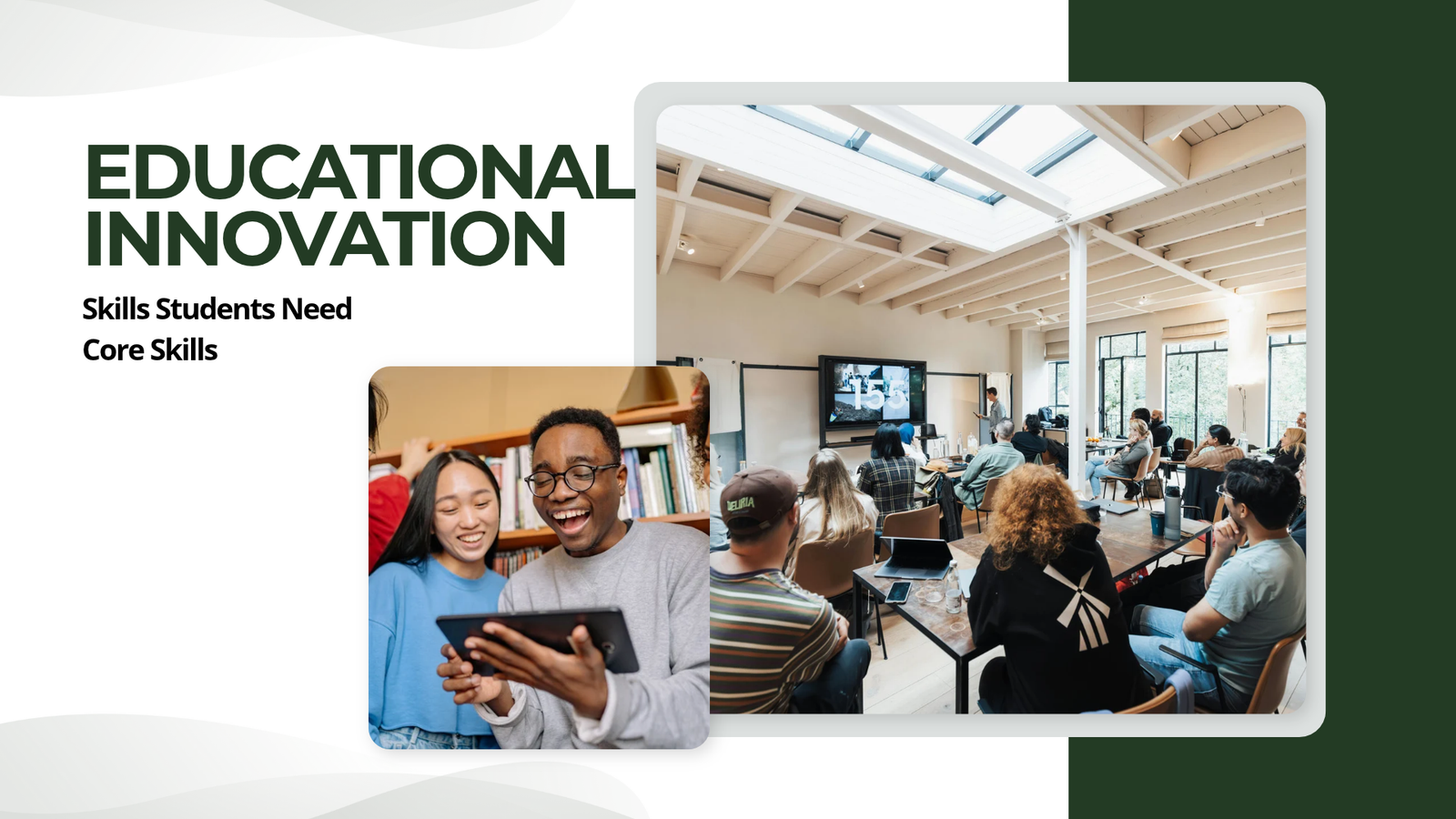
Teachers' roles are changing, not going anywhere as technology advances in education. While there are lots of information about on the internet, students need teachers who can make sense of it, who can be encouraging and who can recognise and correct their misconceptions and guide them to make good choices.
Today's teachers are increasingly expected to be facilitators, mentors and learning designers. They support students to explore questions, assess evidence, engage in discussion and apply theory to practice. Technology should help with some of the mundane aspects of life, but the teacher still has the responsibility of providing a supportive learning environment and making important educational decisions.
Professional learning is key to this change. Teachers should have access to support for learning how digital platforms function, evaluating the trustworthiness of digital resources, safeguarding student data, and developing engaging lessons. Training should not be restricted to a single basic session, but a continuous process.
It is important that schools also understand the demands that are put on teachers. Incorporating new tools without adequate time, training, support, and preparation can actually lead to more work for educators.
The best innovation ideas are those that enable teachers to better engage with students. Technology can enhance meaningful learning by supporting the human connections teachers can build when they have the resources and professional freedom to use new methods thoughtfully.
Lifelong Learning is becoming a necessity all over the world
Education is no longer restricted to the school, colleges and universities. The nature of industries is constantly shifting and the professional needs are constantly changing, so lifelong learning opportunities are more important than ever.
Lifelong learning encompasses formal qualifications, vocational training courses, work-based learning, self-education, community-based learning and on-the-job learning. There are opportunities available online to enable adults to study at the same time as they are engaged in a job, and flexible training programmes can prepare workers for new roles.
This is especially important to individuals seeking to begin a new career or re-enter the workforce after a hiatus or those who would like to build their digital and technical skills. Organizations might also benefit when training enables staff to adjust to different procedures and duties.
One potential way to recognise certain competencies without the completion of a full degree program is through microcredentials and short courses. The value of these, however, is contingent on quality of the course, reputation of the provider and recognition by employers and educational institutions.
Lifelong learning goes beyond professional development. The community should have access to these opportunities to enhance its understanding of finance, media, health, and civic awareness. A learning society is better prepared to deal with social, technological and economic change.
A sustainable and future-oriented approach to the education sector
Sustainability in the environment is another key factor in school and university considerations. Climate change, biodiversity, resource management and the link between human activities and the natural environment could be explained to students in educational institutions.
Science, geography, economics, engineering, and social studies are possible subjects to integrate sustainability. Students can research the issues of the environment in their area, do energy audits, develop a recycling plan or look at ways communities can lessen waste.
Practices that demonstrate sustainability can also be displayed at schools and universities. Teaching and learning can be linked to everyday choices like energy-efficient buildings, responsible purchasing, water conservation, greener transportation choices and careful use of food waste.
Digital education can decrease some of the travel and paper consumption, but it does not necessarily mean it is environmentally friendly. Materials and energy are needed for electronic devices and digital infrastructure also has an environmental impact. Institutions have to take into account the overall consequences of their decisions, however.
The overall objective is to convey sustainability as a real issue rather than a theoretical one to students. Future generations can be armed with knowledge and judgment to make decisions regarding resources of the planet.
The challenges that may impact the future of education
There are substantial barriers to the innovation in education. The digital divide is one of the most pervasive. Students may not be able to take advantage of online learning when they do not have reliable access to the internet or appropriate devices and classroom environments.
Another significant issue is funding. Schools require resources to buy technology as well as maintain their technology, to train teachers, to be able to keep technology up to date, to have technical support to help them, and a great deal more. If the projects are not planned for the long term, they can be hard to maintain.
Student privacy and cybersecurity must go hand in hand. Schools and educational systems might store confidential details relating to children's learning and behaviour, and their progress or performance. During the time of the Internet, institutions need to know how this information is gathered, kept, distributed, and safeguarded.
The potential also exists for innovation to exacerbate inequalities. The better-resourced schools might have better access to more sophisticated equipment and specialised programmes, whereas the less well-resourced schools remain without basic facilities. When it comes to distributing educational resources, however, it is important for policymakers to take into account fairness.
Lastly, change in education is a process that can take some time. New methods must be rigorously tested to assess their effectiveness in promoting learning, participation and long-term results. The best systems will be the ones that mix evidence, responsible decision-making and a strong focus on student well-being with experimentation.
What is the Future of Education?
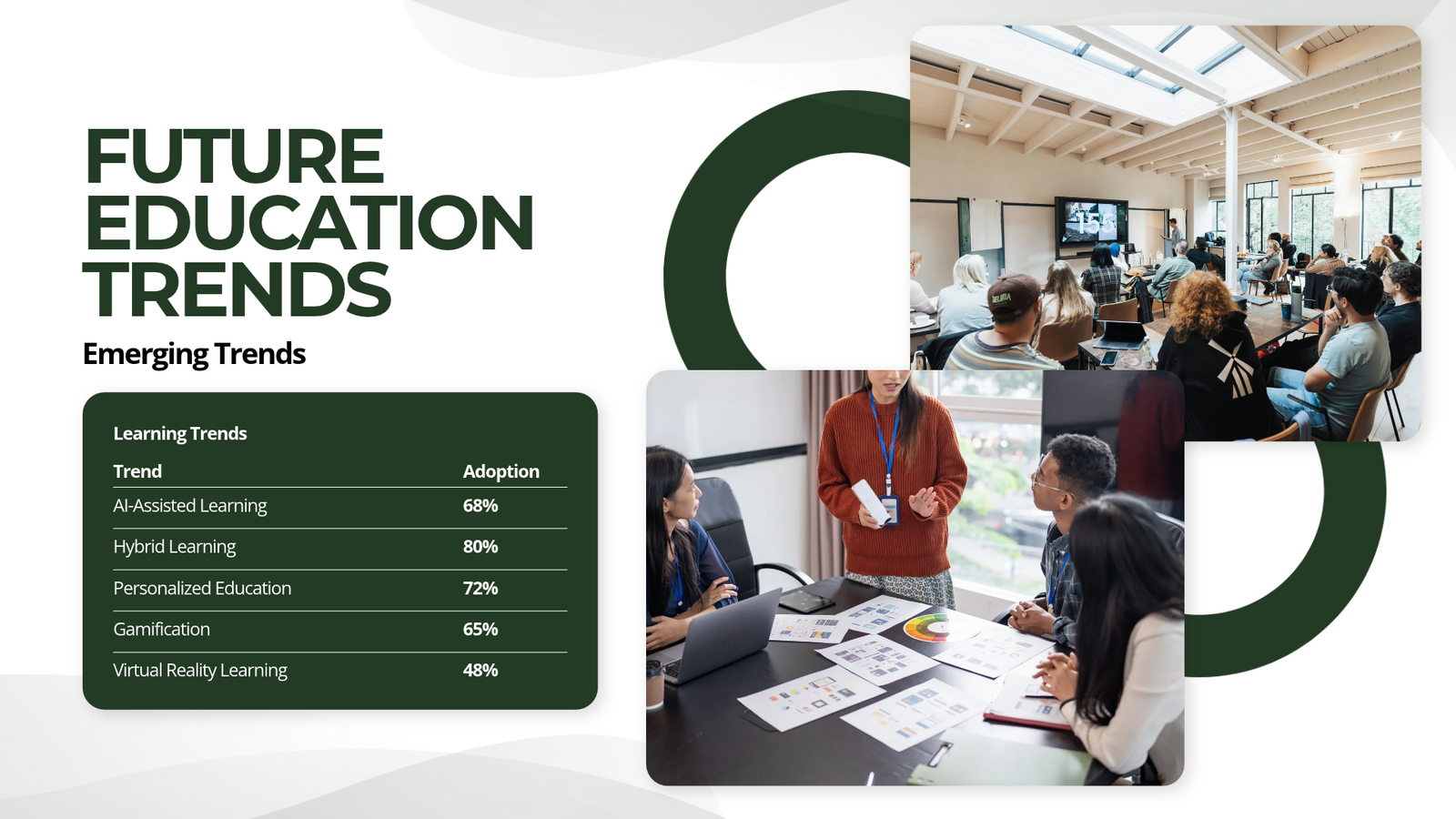
No single technology or teaching approach is going to be the defining feature of the future of education. Rather, it will grow out of what can be seen as a synergy between digital resources, competent teachers, flexible learning spaces, experiences and increased international cooperation.
Learning, pedagogical approaches, and professional development could be more interactive, flexible, and accessible in classrooms across the lifespan. Students were able to increasingly integrate academic learning and projects, simulations, experiences in the world of work and international cooperation. With the right tools, teachers could have more time and opportunities to provide more personalized guidance and support to address individual learning needs.
In parallel, the traditional educational pillars will continue to be significant. Further learning will be based on learning to read, write, and understand mathematics, scientific reasoning, historical understanding, creativity, and social development. New methods need to reinforce these rather than divert them.
The transition is being shaped by governments, institutions, families, educators and technology providers. They will shape the potential for innovation as an opportunity to a wide range of learners or as a right only available to some with advantages.
Finally, the effectiveness of education innovation isn't about devices in class or the novelty of a digital platform. It is defined by its effectiveness in educating students, providing meaningful assistance for teachers, and increasing the access to knowledge and skills to enable people to live fulfilling lives.
Conclusions
Education is undergoing a profound change, and new opportunities are opening up for the ways in which people learn, acquire skills, and engage with the world around them. Digital learning, personalized teaching, immersive learning, inclusive teaching, and lifelong education are presenting new challenges and opportunities for reimagining old solutions and meeting the needs of evolving societies.
However, innovation is not the solution to all educational issues. Some of the basics remain, such as access, affordability, teacher training, student well-being and the safeguarding of personal information. All new equipment will be assessed on its educational use and its usefulness to students in a variety of situations and needs.
The future will rely on the balance of technology and human interactions, opportunities in the world, and academic knowledge and hands-on experience. If innovation is led by these ideas, education can be more flexible, inclusive and life relevant.
There is no longer a single question of how education can change. It is how social systems can help to ensure that these changes result in actual learning and fair opportunities for all. The answer will make a difference for the future of classrooms, but also the future of communities, economies, and generations to come.