

For centuries, human beings have been captivated by Mars. Its reddish surface, old valleys, enigmatic rocks, and resemblance to Earth spurred scientists to ponder one of the most significant questions in contemporary science: Was there ever life on Mars? The quest for life on Mars was once thought to be an impossibility but has become one of the highest priorities of Mars exploration. Evidence of ancient water is being found, along with complex organic molecules and evidence of geological features that could contain clues to the planet's history. While scientists have not yet confirmed life on Mars, each of the new discoveries brings us closer to the answer of whether or not Earth is the only world that has ever had living organisms.
The reasons for Mars being a major focus of space exploration
Mars is one of the most tempting worlds to explore for the signs of life outside the planet. It is fairly nearby, with a day that lasts about 24 hours and 37 minutes, and geologic features that imply a very different environment in the past. It is believed that there were rivers, lakes and even extended water bodies on ancient Mars. These places might have offered a few conditions that are favorable to the development of microbial life.
Another major motivation of studying Mars is the fact that the surface of this planet holds a record of planetary history. On Earth, erosion, volcanic activity and plate tectonics continually modify the landscape, but on Mars large areas of the surface still preserve evidence of ancient geology. A study of these rocks and minerals can reveal how the planet formed, when water left the surface of the planet, and if habitable environments were present long enough to enable life to evolve.
Ancient Water and the Possibility of Life
Water is one of the vital ingredients of life as we know. These observations have been made by orbiters, landers, and rovers, and include the presence of dry river channels, ancient lake basins, sedimentary deposits, and minerals that are created when water interacts with them. The findings indicate that liquid water was a major part of Mars's geology.
The Jezero Crater is where NASA's Perseverance rover is going to explore a lake and river delta. In September 2026, NASA announced new findings that the rocks in the region called the Margin Unit had had at least three encounters with water. The evidence suggests that there have been multiple water-related events, such as groundwater activity and a subsequent history of interaction with heated fluids. These environments are of scientific interest because the water-rock reactions can generate chemical energy that some microorganisms on earth can obtain to live.
But if the evidence of past water exists, that doesn't necessarily indicate that life existed. It shows that Mars had environments that could have been suitable for life. Now, scientists have to decide if those environments were conducive to life or if the features can be accounted for non-biologically.
This is about NASA's Perseverance Rover and the Search for Ancient Microbes
One of the most significant robotic explorers in the search for past life on Mars is NASA's Perseverance rover. It explored rocks, studied minerals, analyzed environmental conditions and collected samples for eventual studies in a lab after arriving in Jezero Crater in February 2021. The scientific instruments it is equipped with enable scientists to analyse the chemistry of rocks and to trace characteristics that could help answer the question of whether the ancient environments were suitable for living things.
A rock they found that they named Cheyava Falls was one such interesting find. Investigations identified features and chemical patterns that appear to be biosignatures – they might be consistent with past biological activity. Later studies have studied the organic carbon bound in Martian rocks, and studied whether the observed properties can be accounted for by known non-biological processes.
It's crucial to differentiate between a potential biosignature and proof of life. Several different explanations may be responsible for a mineral pattern, organic compound or unusual chemical signature. Scientists therefore look at more than one piece of evidence, and try to find additional evidence that supports their conclusion. That evidence is being built on by Perseverance, but the question of whether Martian life has ever existed remains unanswered.
Mars orbiters and previous missions will play a crucial role
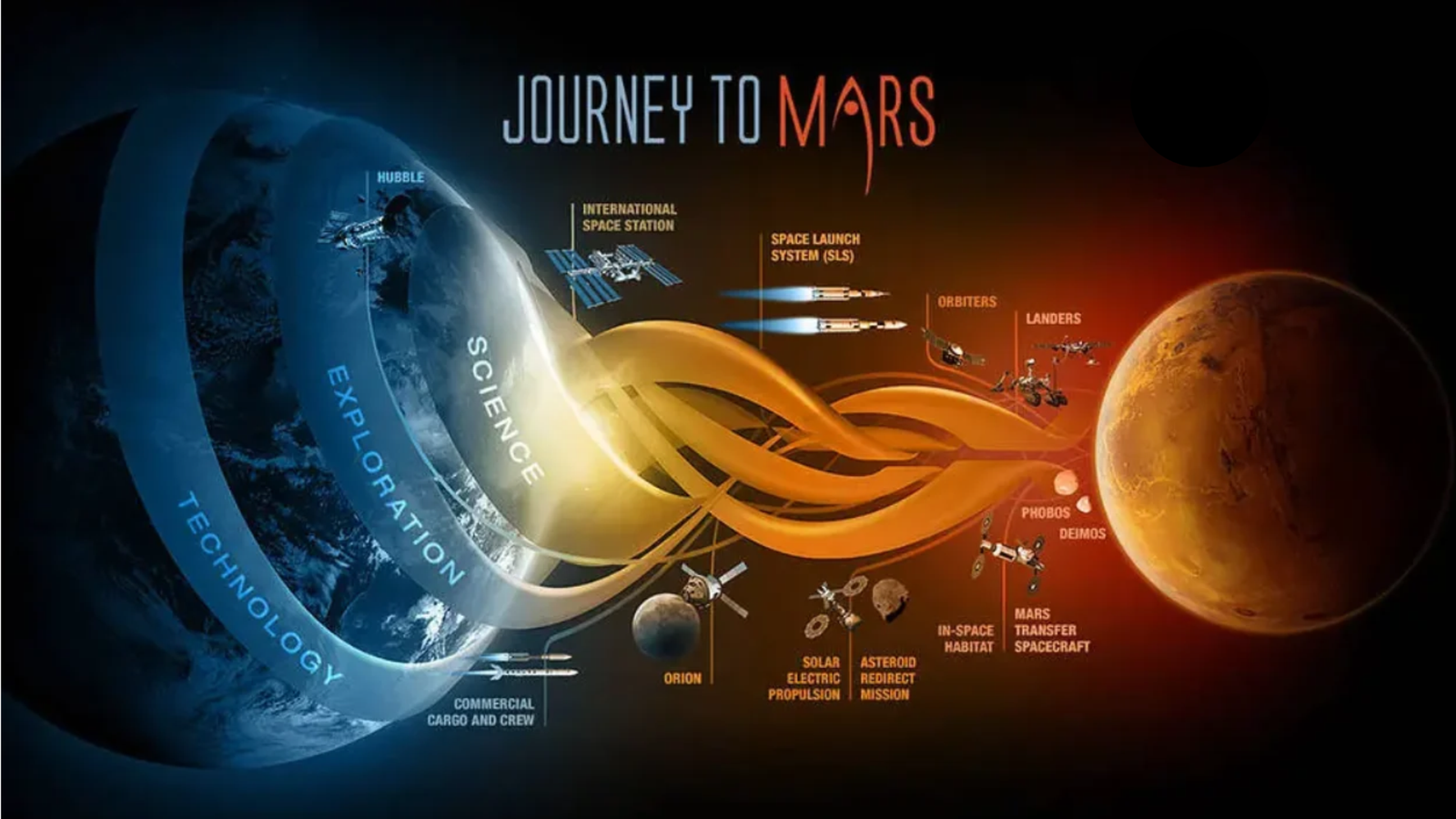
Search for life on Mars has gone through a long decade of international efforts. The surface has been mapped by orbiters, its atmosphere has been studied and minerals linked to ancient water have been found. Scientists have been testing observations made from space with the help of landers and rovers to examine the ground directly.
Since 2012, when NASA's Curiosity rover touched down in Gale Crater, it has been a major contributor to the knowledge of ancient Martian environments. It has found fossil conditions of lakes and has analyzed fossils of organics found in rocks. Perseverance follows up this work by exploring a different ancient environment, and taking samples that are carefully chosen.
Other international missions have been helpful in the understanding of the planet. ESA's Mars Express has been looking at the geology and processes in the atmosphere of Mars, while the Trace Gas Orbiter (TGO), which forms part of ExoMars, is examining the atmosphere and searching for trace gases which can give clues to chemical or geological processes taking place. Comprising these missions, it is clear that there is a need for multiple instruments, different science approaches and observations over many years to understand Mars.
Mars Sample Return and the need for laboratory research
A major challenge in planetary science is that a planetary rover cannot have all the laboratory equipment that is available on Earth. Instruments on Mars can carry out very sophisticated chemical analyses, but scientists could learn a great deal by using advanced microscopes, sensitive analytical instruments and experimental techniques which are hard to operate on a rover to examine Martian samples.
Perseverance has been carefully collecting and storing rock and regolith samples from Mars. Such material could be brought back to Earth to allow for much more detailed study of its mineral structure, organic chemistry, isotopic composition, and potential biosignatures. Scientists also could put to the test alternative explanations for the strange chemical patterns and decide if they agree with either biological or non-biological processes.
Sample return, however, is a technically challenging and costly mission requiring synchronized space and ground operations, including spacecraft, landing systems, and sample-handling operations. The exact timing of any programme to return samples is dependent on mission design, budget and schedule and may change. Nonetheless, transport of selectively chosen Martian material to Earth is still a key science goal that would greatly facilitate the quest for signs of past life on Mars.
The search for life on Mars is fraught with difficulties
Though there has been great technological leaps, there are a number of major challenges to the search for life on Mars. The planet's harsh environment poses challenges to its robotic instruments, as well as future human explorers. Surface operations are difficult with low temperatures, dust storms, radiation exposure and a lack of liquid water. All these conditions make it more difficult to find biological material that might have survived for billions of years.
Contamination is another issue. Earth-based microorganisms could be accidentally carried to Mars by spacecraft and make discoveries on the surface more difficult to interpret. Planetary protection precautions are therefore required to minimise contamination hazards and the integrity of investigations.
There is another challenge in scientific interpretation. The presence of organic compounds or unusual minerals does not necessarily indicate the presence of life, and the discovery of one is not enough to prove the existence of life. The researchers should take into account the geological environment, environmental history, chemistry, and other potential explanations. Multiple investigations and laboratory studies might be necessary to make reliable conclusions.
The possibilities of Mars Exploration to benefit life on Earth
The research carried out on Mars can be used in other fields besides space exploration. Creating dependable systems to recycle water, generate oxygen, produce energy, and operate in isolated environments can help lead to technologies for use in remote locations on planet Earth. Space exploration also promotes developments in the fields of robotics, materials research, communications, environmental monitoring, and self contained scientific instruments.
The exploration of Mars can also help advance the knowledge of planetary climates. The study of Mars' transition from a watery place to its current cold and dry atmosphere will yield greater insights into planetary environmental processes that affect habitability, long-term stability of water on Mars, and atmospheric evolution. Comparisons aid the understanding of Earth in a planetary context.
The value of scientific collaborations, as illustrated by international Mars missions, is the other aspect of the story.The other part of the story is the value of scientific collaborations shown by international Mars missions. Various researchers from different countries exchange observations, create instruments, analyse data and share an overall knowledge base. This collaboration can be beneficial in developing the scientific skills of its members and encourage the next generation to pursue studies in astronomy, engineering, physics, geology, and related areas.
The Search for Life Beyond Earth is in the Future

The next generation of Mars exploration will involve creating a more detailed history of Mars and understanding if the planet was once habitable. Rover data will continue to be analyzed by scientists, organic chemistry will be studied, minerals that may contain water will be examined, and sites will be examined that may contain evidence for ancient microorganisms.
Future missions may investigate regions that are relatively free of the effects of radiation and surface weathering. These sites may have more potential for retaining sensitive chemical indicators of ancient biota. Advances in laboratory methods and the use of robots in space exploration may also aid the search for more elusive forms of life, or help to exclude false-positive detections of non-biological life processes.
Mars is also a part of a much bigger quest to find life in the Universe. Studies of the Red Planet are complemented by studies of icy moons, of distant exoplanets, and of other environments where liquid water, or environments where conditions are suitable for the existence of liquid water, is present. Knowing how life can develop and sustain itself in other planetary environments helps to better understand how life may be distributed across the universe.
Why Life on Mars Matters for Humanity
Finding microorganisms on Mars is not the only purpose of searching for life there. It seeks answers to the most basic questions that reveal the origin of life, the evolution of planetary environments and the role of humans in the universe. If life is found to have originated separately on Mars it would indicate that life is not unique on Earth. A discovery of this kind would revolutionize the world of scientific thinking and pose new questions concerning the origin and propagation of life in the universe.
The search will still have scientific value, if Mars turns out to be lifeless. If one can understand what happened to a planet that once was warm and wet to become this cold and dry, then they will be able to explain planetary evolution and determine the conditions under which life can exist for long periods of time.
All rover observations, mineral analysis, and the collection of carefully selected rock samples are part of this larger effort. The process may be slow, but the discoveries are steadily improving our understanding of Mars and the possibilities for future exploration.
Final Thoughts
The question of life on Mars is among the most intriguing questions in science. The discovery of ancient water, organic molecules, and potential biosignatures have reinforced the argument that the Red Planet had environments of interest to search for life. But scientists haven't yet discovered any evidence of life on Mars, and finding any biological evidence from natural chemical processes as well is a big challenge.
As robotic missions continue to explore Mars and plans are being developed for Mars human missions, the search will become more sophisticated. Advanced instruments, well-selected samples and future lab studies just may yield answers which have evaded us for generations. The search for life on Mars will extend the reach of human knowledge and provide clues to the universe's history, whether it is evidence of past microbial life or it will be a lesson in why life never evolved on the planet.