The night sky has always fascinated humans, and they have pondered what is beyond the stars. Over the past couple of centuries, astronomers have observed faraway planets, catalogued the constellations, and formulated theories on the workings of the universe. Space exploration has come into an exciting age today. Space-based and ground-based telescopes, advanced spacecraft and robotic explorers and international space missions are facilitating investigation of questions that were once unimaginable.
Space is no longer just a place for scientific observation. It is now a land of technological innovation, international cooperation and commerce. The potential for space exploration to change our view of the universe and our role in it is remarkable, whether it be with the return of astronauts to the Moon or the search for planets that may be able to support life.
1. The New Era of Space Exploration
Since the first artificial satellites and manned spaceflight missions, space exploration has undergone a dramatic transformation. Previous missions were geared toward demonstrating the ability of humans to leave the Earth and survive in space. Today there are much more ambitious programmes, such as carrying out in-depth research in science, planning sustainable operations on the moon and eventual manned missions to Mars.
New exploration systems, robotic spacecraft and reusable rockets are getting government and private investment. The progress is enabling the planning of ever more ambitious missions and making launch more efficient.
Explorers of the future won't just be concerned with getting to distant destinations. Scientists also need to know how planets form, how galaxies develop and if there is an environment for life out there. These are primary questions that are explored in each new mission.
2. Astronomy is unveiling a more profound universe
Humans are using astronomy as their central tool for pursuit of knowledge relating to the cosmos. Today's observatories can see light from faraway galaxies and look at the air inside planets orbiting other stars, as well as objects that are too faint to be seen by ordinary telescopes.
One big advantage of a space based observatory is that it avoids many of the distortions that occur in the earth's atmosphere. Astronomers can use the observations of the universe over various wavelengths to explore stars, black holes, nebulae and galaxies in more detail.
These capabilities will be even further extended by future telescopes. NASA's Nancy Grace Roman Space Telescope will be a wide-field observatory that will study dark energy, dark matter, and faraway planetary systems. Future observatories could also assist scientists in the hunt for signs of life on Earth-like planets.
The findings could change the current theory of the universe. But there are many of the largest questions unanswered, and astronomy is one of the most dynamic areas of science today.
3. Searching for Life on Other Worlds
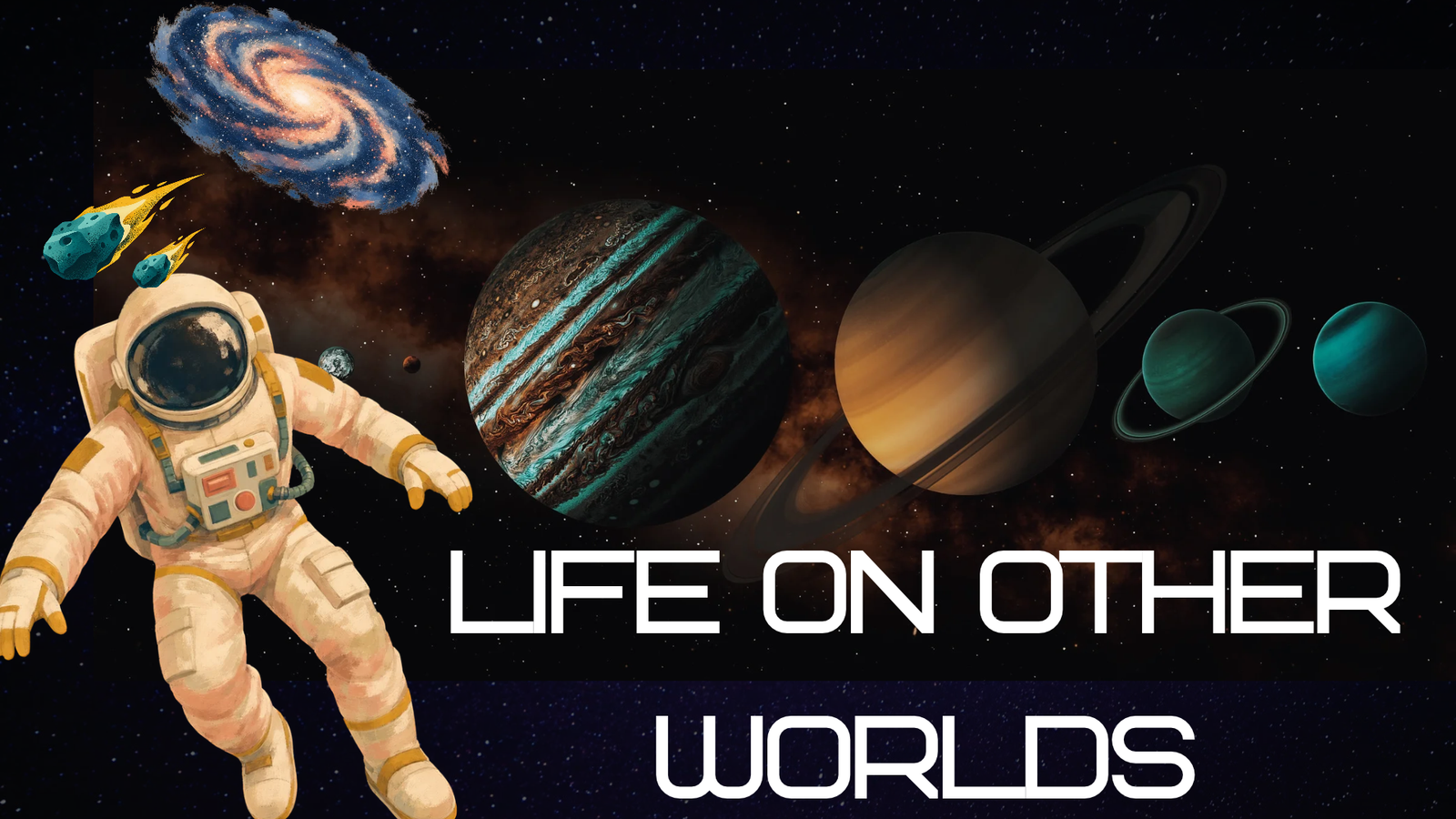
The possibility of life existing outside of the Earth has always been a very interesting subject in space exploration. A thousand planets orbiting stars other than the sun have been found. Some inhabit areas where it may be possible to have liquid water at appropriate atmospheric conditions.
The idea that a potentially habitable planet exists doesn't mean that life is there. A number of issues need to be studied such as the atmosphere, temperature, chemical composition, and radiation environment of the planet.
Researchers are also looking at sites near the lab. The preservation of evidence for ancient environments that once may have supported the existence of microbial life on Mars. The moons of Jupiter, Europa, and Saturn, Enceladus, are of special interest because there is some evidence that there are oceans underneath their ice.
Future robotic missions might explore these environments for chemical signatures related to biology. The potential of powerful telescopes to explore the atmospheres of other worlds for biosignatures should also be considered.
If there was compelling proof of alien life, it would be one of the most important discoveries in the history of science. For now, however, the answer to the question of extraterrestrial life is still unknown.
4. The Moon is becoming a gateway to deep space
The Moon is again an important target for space exploration efforts from different countries. Current lunar programs are not like those of the Apollo era, in which landing missions were brief, but seek to build the knowledge, hardware, and facilities needed for extended missions.
This is an important component of NASA's Artemis programme. International partners and business are helping to develop technologies that will support lunar exploration, scientific research, and future human lunar and deep space explorations.
Scientists are especially interested in the south polar region of the Moon since some permanently shadowed regions may contain water ice. Lunar water may be available and usable economically and could be used for life-support systems and for the production of lunar resources for future missions.
A stable human presence on the Moon would have to have dependable power, radiation protection, transportation and communications, as well as efficient resource use. It's also important that researchers learn what happens when human beings and equipment is placed on the moon.
Ultimately, the Moon may serve as a proving ground for technologies that could be useful to Mars and other locations. But the establishment of a permanent human presence on the moon will take a lot of money, international cooperation and additional technological advances.
5. Mars and the dream of human exploration
Mars continues to be a front runner in the long-term exploration plans of humanity. The geological characteristics suggest that it was a very different world, with warm and wet conditions.
Scientists have used robotic rovers and orbiters to explore ancient river channels, deposits and environments where liquid water existed. The results provide clues to the history of the Earth and to how the Earth might evolve in the future and how it could be suitable for life.
The journey of human beings to Mars would be much more difficult than to the Moon. The travel time, radiation exposure, communication delays and the requirement for reliable life support systems would make a crewed mission very difficult.
The astronauts would have to be provided with food, water, oxygen, energy and medical supplies during the flight. Science and technology are being studied that would allow water to be recycled, oxygen to be generated, and that would allow locally available resources to be used for minimizing the amount of equipment brought from Earth.
While a human mission to Mars is still a future goal, a long one, current research efforts are aiding scientists in determining the technologies and operational experience that these missions would need.
6. Commercialization is Boosting the Space Economy
National space agencies are no longer the only ones that do space exploration. Commercial enterprises have become more and more involved in launch services, satellite networks, spacecraft production and cargo transportation.
Competition and new approaches to space system design and operation have been spurred by private investment. Government missions, research organisations and businesses that require access to orbit can be supported by commercial launch providers.
Another area that is developing is the commercial space stations. If technically and economically feasible, future facilities may offer sites for scientific experiments, industrial research and astronaut training.
There are also commercial opportunities in space-based data services and Earth observation, with satellite communications. These technologies are already being used in applications such as weather forecasting, navigation and even monitoring of disasters.
However, as the space economy develops, the issue of regulation becomes more relevant, as does the congestion of space, space debris, and proper use of the resources of space. International rules and cooperation will need to be effective in order to sustain commercial development.
7. The Future of Space Technology: Rockets that can be used more than once
Rocket technology plays a crucial role in the future of space exploration. Many of the traditional launch vehicles were used on a single flight and accessing space was very costly and consuming.
Reusable launch systems are changing this approach. Companies have the potential to lower launch costs and boost mission frequency by rescuing and refurbishing mission critical rocket parts.
Reduced launch costs would be beneficial to scientific research, satellite deployment, commercial space stations and robotic exploration. They could also facilitate moving equipment for lunar and planetary explorations.
But not every mission can be cheap simply because it will be re-usable. The mechanisms of rockets still have to be complex engineered, maintained, fueled, and have to undergo plenty of safety testing as well as ground infrastructure.
Advances in propulsion, materials science and manufacturing should lead to an even better performance boosting of launch vehicles in the future. If humans are to be able to travel to more distant locations in the future, with their costs and environmental impacts controlled, these innovations will be key.
8. The use of Space Telescopes and the Next Generation of Discoveries
Owning a telescope is one of the best tools for an astronomer. They enable astronomers to study far-away objects by using electromagnetic radiation that has come from a great distance.
NASA's James Webb Space Telescope (JWST) has now shown the power of infrared imaging to provide clues to the nature of early galaxies, star formation, and planetary atmospheres. Its observations are assisting researchers to study the evolution of planetary systems and the formation of cosmic structures.
The future observatories will expand on these accomplishments through greater surveys, enhanced instrumentation, and more precise measurements. The planned NASA Roman Space Telescope will be used to explore massive expanses of the cosmos, investigate the nature of dark energy and dark matter, and discover new exoplanets.
Ideas for future missions to directly observe potentially habitable worlds and to analyze their atmospheres for chemical signatures indicative of life are also being developed.
Every new observatory has its own scientific contributions. Using the information provided by a number of instruments and ground-based facilities, astronomers can construct a more comprehensive picture of the universe and test conflicting scientific models.
9. Space Waste Management
The use of robotics and AI in spacecraft and scientific instruments is a growing area of importance. Space missions are often far from the Earth and communication delays make it difficult or impractical to have continuous human control.
A spacecraft navigation system that can assist in autonomous navigation, target identification and response to some unforeseen situations. Robotic rovers can explore terrain, gather data and make decisions on where to proceed for more investigation.
Machine-learning methods can also aid astronomers in the analysis of vast amounts of information collected by telescopes and planetary explorations. These tools will recognize patterns and can be used to help classify astronomical objects and to mark observations for further study.
Robots could in the future be used to prepare exploration sites before astronauts go there. They might help to map the land, to carry equipment, and to experiment with construction techniques and resources in the area.
But autonomous systems need to be kept within specified safety constraints. Scientific conclusions also need to be verified as automated analysis can be incorrect or present false conclusions if the data are incomplete or the models are not appropriate.
10. Space Habitats And The Possibility Of Living Beyond Earth
For humans to survive in space for long periods of time, environments need to shield them from the hazards of space. Radiation, microgravity, isolation and limited access to medical care all create serious challenges for astronauts.
Space habitats are designed to accommodate essential life-support, housing, research facilities, and from the outside environment. Later stations would be able to carry out longer scientific missions and would be experience which would be relevant to lunar or Martian habitats.
Scientists are working on ways to recycle water, control the atmosphere, grow food and generate a steady power supply. The technologies would make it easier to reduce the dependence on regular delivery from Earth.
It is also important that scientists know how long-duration spaceflight will affect the body and the mind. Long-duration missions will still have human health research, exercise systems, nutrition and family communication as key factors.
Space habitats, while far from an immediate reality for humanity, could allow us to work and research on Earth and beyond in a step-by-step fashion.
11. Challenges and Risks of Exploring Space
In spite of all the technological advances, space exploration is still challenging, costly and potentially hazardous. Robotic missions and human crews can be compromised by launch failures, equipment malfunction, radiation and extreme temperatures.
The problem with long distance missions is that communication signals travel from the earth to the spacecraft, and back and forth. On Mars, astronauts would need systems which would enable them to solve a lot of problems without immediate support from mission control.
Budget constraints also have a bearing on which missions get priority. The development, testing and implementation of large scientific projects demand many years and specialised equipment, and a long financial commitment from governments, institutions, or commercial partners.
Space debris is also a problem that is increasing. The remains of old satellites and pieces broken up in collisions can harm operational satellites and pose hazards to some activities in orbits.
Good practice in exploration thus demands that it be carefully planned, soundly engineered, scientifically open and based on cooperation between nations. It is not only about reaching new places, but also about reaching them in a way that keeps astronauts safe, safeguards science objectives and ensures the future of space use.
12. The Future of Space Exploration Could Look Like
There are groundbreaking opportunities in the fields of astronomy, spacecraft engineering, and planetary science in the next few decades. The future of planetary science could involve the discovery of new planetary systems with the more capable telescopes, and robotic missions may probe the best places to learn about the origins of life.
The experience gained in exploring the moon could be useful for longer journeys, and developments in life-support systems have boosted the chances for human Mars exploration. Access to orbit might also be increased by commercial launch systems and new spacecraft designs.
Enhanced techniques for the study of dark matter, dark energy, black holes and the early history of cosmic evolution. These investigations could upset the theories and raise new questions concerning the structure and evolution of the universe.
Progress will not be defined, nor be judged solely by discoveries or human landings. Advances in scientific instrumentation and trustworthy spacecraft operations and international research networks can be equally significant.
The future will be dependent on continued investment, on being realistic in planning and on being able to learn from the failures and successes of those missions. Space exploration is a gradual process, with every achievement opening up the doors for the next.
The Universe is filled with countless secrets
The future of space exploration isn't just about rockets, far-off planets and technological breakthroughs. It is a testament to humanity's continuing attempt to learn more about its origins, the mechanisms of its universe and the nature of Earth as the only planet that supports life.
Each new telescope observation, each robotic investigation and human spaceflight mission contributes to a much larger scientific picture. Some will support an already established theory, and others could question a current theory.
There are many challenges, financial and technical, on the road ahead. But the rewards are so great as to go beyond exploration itself. Materials science, communications, robotics, monitoring of the environment and the knowledge of Earth's position in space can also be developed through the exploration of space.
We can't expect to know all the answers to the questions that humanity might ask in the next few decades. However, with advancements in technology, cooperation and ongoing scientific curiosity, exploration can go further and understanding can be gained more than ever before.
The next big find may be from the next galaxy, an icy moon or even from the surface of Mars or a planet orbiting another star. It could alter our perception of how the universe works – and how we fit into it – wherever it comes from.