
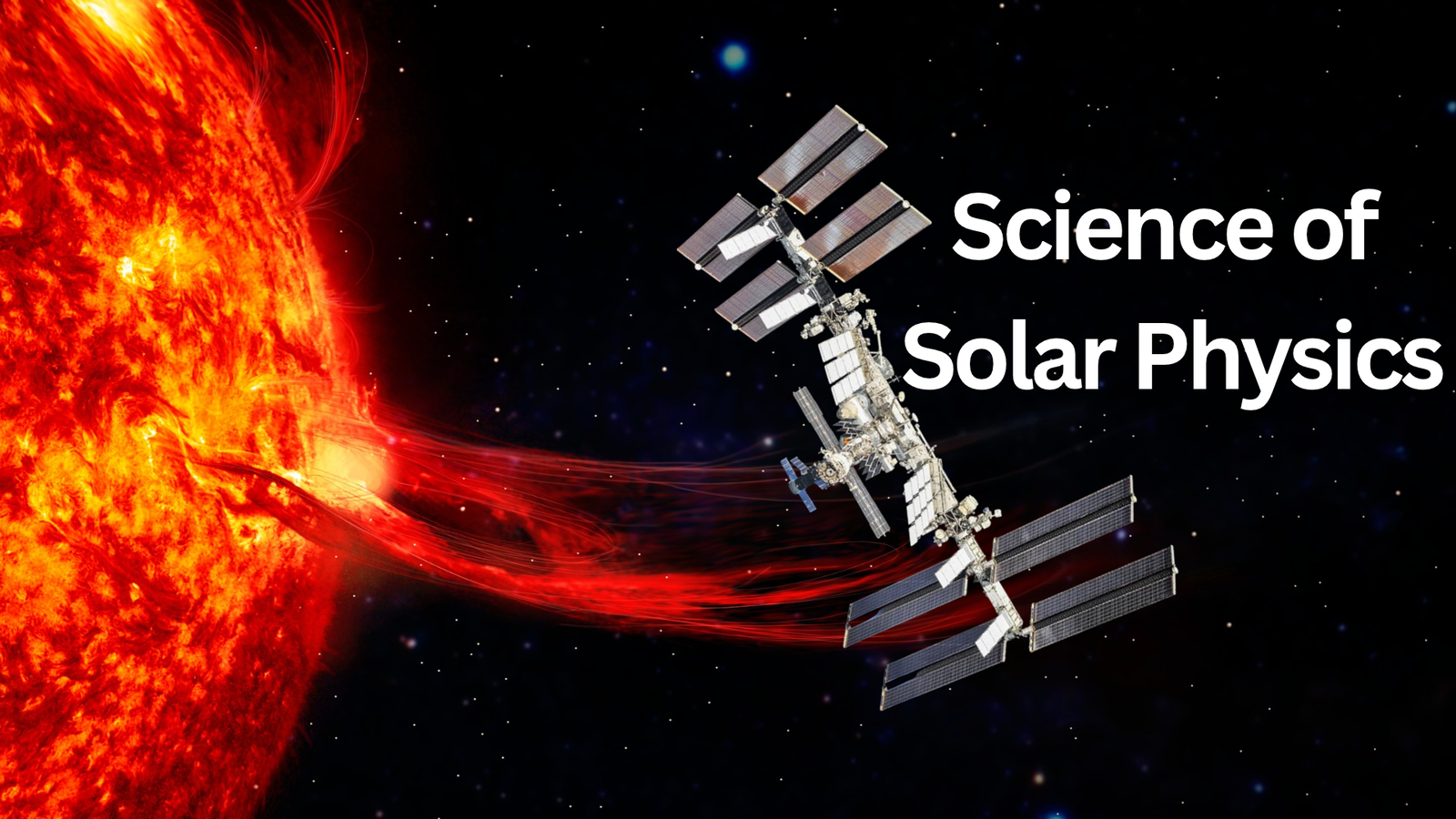
It is well known that the Sun is the most essential source of energy in our Solar System, and it can also be a very powerful and variable star. It not only supplies light and heat to life on Earth, it also generates huge magnetic bursts, solar flares and bursts of charged particles that shoot out into space. Such events can impact satellites, communications systems, navigation and in fact electrical power systems.
The science of solar physics aids in the understanding of these mighty processes. The study of the Sun's magnetic activity can help solar scientists to understand how solar storms develop, why flares occur, and how space weather impacts Earth. Solar activity becomes increasingly important in the increasingly space based society that we live in.
1. Knowledge of sun, moon and star rise and set
The Sun is a great ball of very hot plasma (gas) consisting primarily of hydrogen and helium. Nuclear fusion in its core creates the energy of this star, and releases massive energy as the hydrogen nuclei fuse into helium. This energy radiates out from the Sun and ends up in space as light and other radiation.
However, the Sun is not a completely stable object. It has powerful magnetic fields, its surface and atmosphere continually changing due to moving plasma, variations in temperature. These magnetic forces create sunspots, solar flares and other energetic events.
A major solar physics problem is what happens to the magnetic energy that accumulates as it is released. As the Sun rotates and the plasma flows, the Sun's magnetic field twists and becomes complex. These magnetic 'structures' can rearrange and let out vast quantities of energy, creating solar eruptions.
2. Solar Flares: Violent Outbursts of Energy
Solar flares are one of the most powerful phenomena that can happen in the Sun. They occur when magnetic energy stored in the solar atmosphere is suddenly released, creating a strong, short burst of electromagnetic radiation, such as ultraviolet light and X-rays.
These explosions may persist for several hours or minutes, and can emit energy in a variety of wavelengths. Solar flares are categorized based on their X-ray intensity: A, B, C, M and X. X-class flares are the ones that are the most intense in this classification system.
Because electromagnetic radiation moves at the speed of light, solar flares can affect Earth almost immediately. A large flare directed toward the Earth may affect the upper atmosphere, disrupting high frequency radio communication, especially on the sunlit side of the Earth.
3. When the Sun throws plasma into space.When the Sun ejects its plasma
Coronal Mass Ejections (CMEs) are massive explosions of magnetic fields and plasma from the Sun's outer atmosphere (corona). CMEs are not just electromagnetic radiation like solar flares, they are also large clouds of electrically charged material ejected into space.
Billions of tons of solar material can be contained in a single CME, and they can travel hundreds or thousands of kilometres a second. There are eruptions that go away from Earth and others that are directed towards the Earth.
If this CME makes it through to Earth, it can interact with the Earth's magnetic field, causing a geomagnetic storm. How strong the impact is depends on the speed, direction and orientation of the material in the impact.
CMEs are of significant importance in the study of space weather due to their potential to impact satellites, navigation systems, communication networks and electrical infrastructure. It is thus important to know how they move, so solar scientists and space weather forecasters can gain a better understanding of them.
4. The pattern of solar activity over time and the appearance of sunspots
The sun has a natural cycle of magnetic activity which cycles about every 11 years. The rate of sunspots and solar eruptions rise and fall during this time.
Sunspots are areas on the surface of the Sun that are darker and relatively cooler. They form in areas where powerful magnetic fields slow down the transport of heat to the Earth's surface. Though they are dark in contrast to their background, they are still very hot.
In times of solar minimum, the number of sunspots and large solar eruptions tends to be lower. The more active the Sun, the greater the chances of solar flares and CMEs.The higher the magnetic activity on the Sun, the more flares and CMEs it will exhibit.
During this cycle, scientists learn more about changes in solar activity over time and make informed predictions of what to expect when space weather is more active. It also offers valuable data to organisations and astronauts in charge of securing technological infrastructure, and satellite operators.
5. How Solar storms affect earth
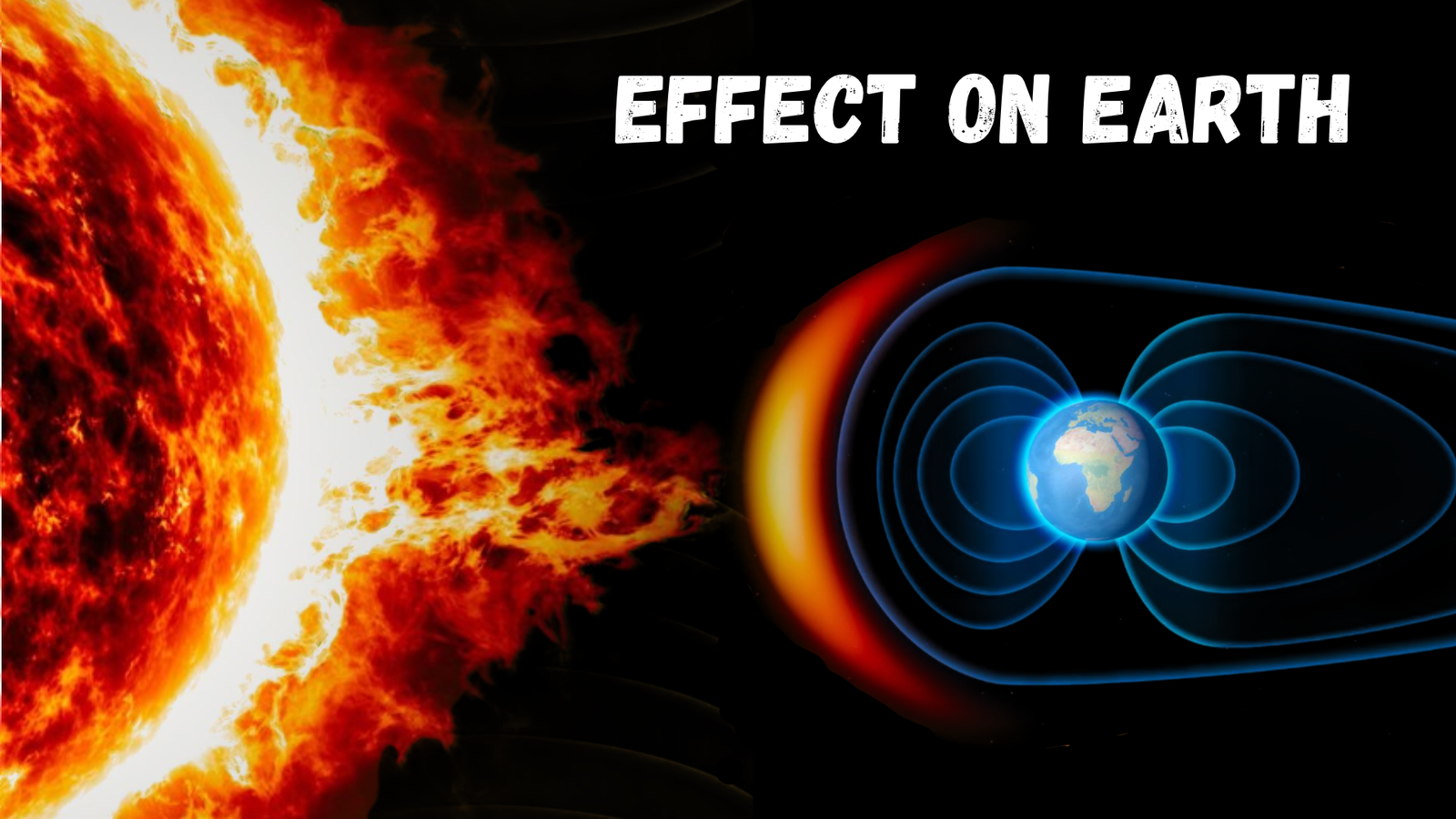
Solar storms are important because when they interact with the magnetic environment of Earth, their energy and particles can affect us. Our planet is naturally protected but there are also a number of technologies that are vulnerable to powerful solar events of which modern society depends.
Electronic disturbances, increased radiation and orbital changes can occur on satellite systems. Significant space weather events can also affect the reliability of GPS navigation and high frequency radio communication.
One more challenge for electrical power grids is the amount of solar energy.Another challenge for electrical power grids is the amount of solar energy. During strong geomagnetic storms, extra electric currents can flow within power systems, further stressing transformers and other power system equipment. A notable incident was the Quebec, Canada blackout in March 1989, due to a geomagnetic storm.
Communication and navigation systems can also have problems due to solar activity, particularly over polar regions, where flights might be affected. All of these risks illustrate the need to monitor space weather, which is necessary to safeguard modern infrastructure.
6. The Sun's behaviour is predicted in Space Weather Forecasting
Space weather forecasting involves the tracking of solar activity and forecasting its potential effects on the Earth and the space environment. Just as meteorologists observe, continuously monitor and rely on scientific models to understand changing weather patterns, scientists use observations and scientific models to understand changing conditions.
Specialist spacecraft and monitoring systems, like NASA's and NOAA's, track solar flares, sunspots, solar wind and coronal mass ejections.
When there is potential for disruptive solar activity, NOAA's Space Weather Prediction Center issues alerts, watches and warnings. These projections assist in electricity providers, satellite-company planning in anticipation of the potential disturbances as well as planning by airlines and other industries.
Thus, the problem of improving the accuracy of forecasts is one of the most significant problems of modern solar physics. A clearer forecast of the coming storm will give organisations more time to take protective measures for sensitive equipment to minimise the effects of a major space weather event.
7. The Future of Solar Physics and Space Exploration
Future prospects in solar physics are closely linked to the development of advanced space missions, next generation observation techniques and the advancement of our knowledge of the Sun's magnetic world. Researchers are finding new methods to observe the sun and explore what causes intense eruptions.
An example of this advancement was the NASA's Parker Solar Probe. Explore the magnetic fields and the origin of the solar wind, the spacecraft travels through the Sun's outer atmosphere and studies the solar corona. It is making observations that are contributing to scientists' understanding of the energy flow in the solar atmosphere and the dynamics that accelerate solar particles into space.
The Sun's behaviour is constantly changing and is being monitored by other observatories, such as the Solar and Heliospheric Observatory and the Solar Dynamics Observatory, that continuously give us information about the Sun.
The development of space-based instruments, computer modelling and forecasting systems in future years may help to detect hazardous solar events earlier before they impact Earth. Future human space exploration will also benefit from this research to develop an understanding of the risks to humans from radiation beyond Earth.
With the increasing involvement of mankind in space, the physics of the sun will become increasingly important to the safety and reliability of future space missions.
Conclusion
The science of solar physics reveals that the Sun is much more than a source of light and warmth. It is a dynamic star characterized with strong magnetic fields producing solar flares, coronal mass ejections and other types of space weather. They are a natural aspect of the Sun's activity, but can affect significant technologies here on Earth.
As the world relies more on satellites, GPS navigation, digital communication and electrical systems, the understanding and knowledge of solar activity is growing in importance. Today, scientists are better able to understand the development of solar storms and the impact that they can have through the use of advanced spacecraft, scientific research, and better forecasting systems.
Finally, the study of the Sun is not just the study of our nearest star. In addition, it is about the safety of modern technology, planning for future space exploration and the forceful connection between Earth and the entire solar system.