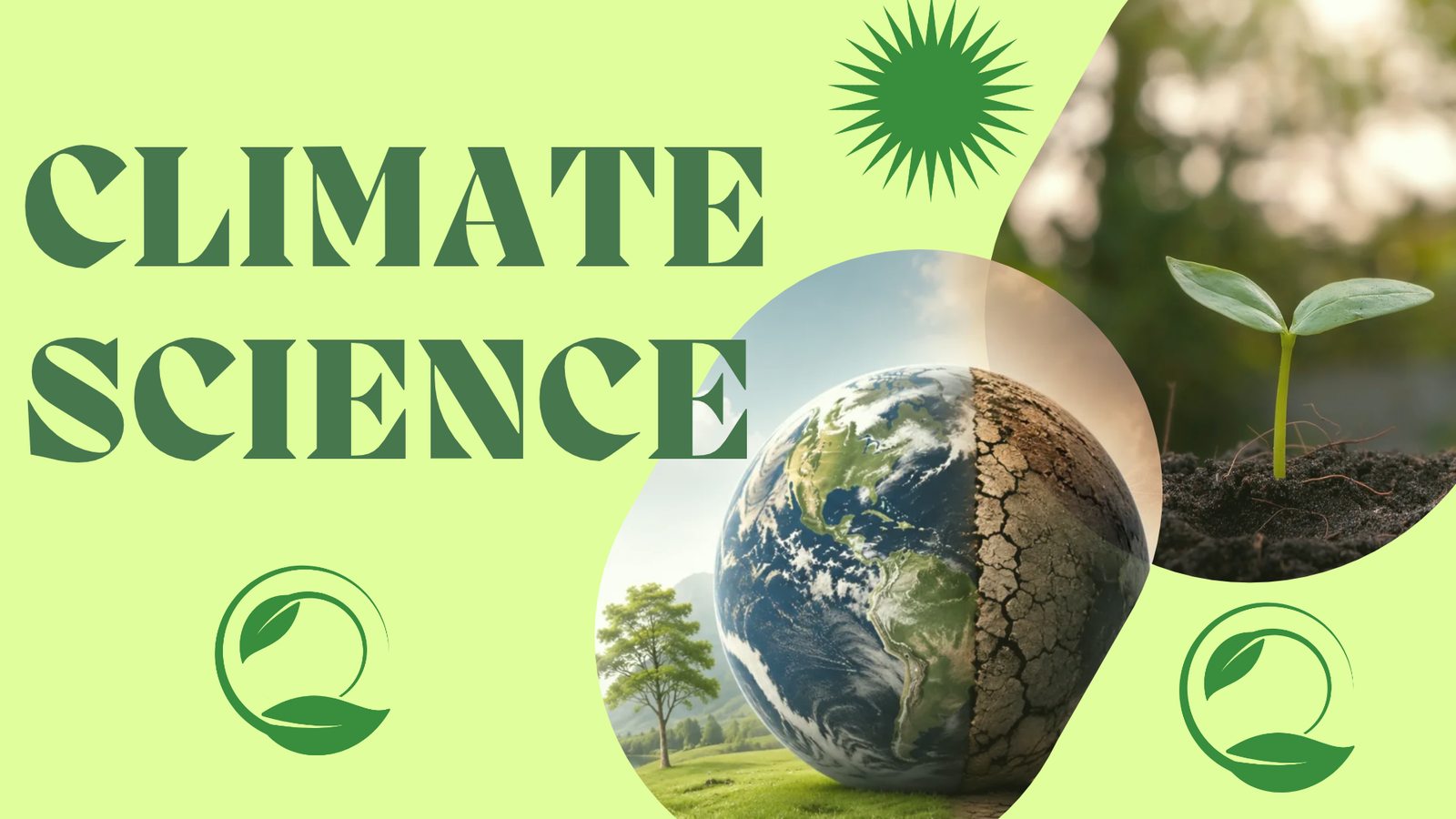
The earth is always changing, but today's changes are so fast and extensive that scientists are very concerned. The increasing trend of warmer temperatures, glacier melt, and shifts in precipitation and more pronounced environmental disturbances are changing natural systems that sustain life on Earth. These changes are not individual isolated occurrences, but are linked by the complex science of Earth's climate.
Climate science is an explanation for the interactions between the atmosphere with oceans, land, ice and living things. It also explores the impact of human activities, including fossil fuel usage and deforestation, on these natural systems. This is a science that needs to be understood because climate change impacts the environment, but also agriculture, economies, public health and daily life. These connections give insight into the changes taking place in our planet and the ways in which they can be prevented.
1. What is climate science and how does it work?
Climate science is the science of the Earth's climate system and its natural and human drivers of climate over time. Weather prediction is concerned with the immediate state of the atmosphere while climate science is concerned with long-term patterns in temperature, rainfall, winds, ocean circulation and other variables. Historical data, satellite data, data from the oceans, ice cores and computer models can all be used to learn about the planet's past over decades, centuries, and even thousands of years.
Earth's climate system is coupled, which means that, changes in one part can effect a number of other parts. A warmer climate could, for instance, impact ocean currents, melt ice and alter rainfall patterns. These relationships can be used to recognize long-term climate trends and to learn about environmental risks and to make projections about what may happen in the future. Climate science is thus the basis for comprehending the societal challenges of a changing planet.
2. The Greenhouse Effect: Why Is Earth Getting Warmer?
The greenhouse effect is a natural phenomenon that maintains Earth at a warm temperature, suitable for life. The radiation that reaches the planet reflects part of it into space and the other part is absorbed by terrestrial surfaces and oceans. Then some of this energy comes out of the earth as heat. Some of this heat is absorbed by the greenhouse gases (GHGs), like carbon dioxide, methane, nitrous oxide and water vapour, and re-emitted in the atmosphere, so not everything escapes directly out to space. Earth would be much colder if this natural process did not take place.
The issue arises when the amount of these gases in the atmosphere is raised by human activity. Combustion of coal, oil and natural gas, as well as deforestation and some farming methods and industrial processes contribute additional greenhouse gasses to the natural mixture of warming gasses. The greater the amount of heat that is retained in the climate system, the higher its average temperature. One of the major scientific explanations for today's global warming is this process.
3. Human Activities and the Main Causes of Climate Change
Nowadays, the global warming in the recent past is being dominated by anthropogenic activities. Fossil fuels are used to produce electricity, transport goods and services to and from factories and heat buildings, and this process emits a tremendous amount of carbon dioxide into the air. Industrial production is also a source of greenhouse gas emissions, and agriculture emits greenhouse gases such as methane through livestock and rice farming, and nitrous oxide due to fertilisers. These activities add to the levels of "man-made" heat-trapping gases and disrupt the climate system balance.
The issue becomes more complex when deforestation occurs, as forests contribute to the regulation of local and global environmental conditions by sequestering carbon dioxide. The loss of trees due to agriculture, construction, and industrial development reduce the ability of the forests to sequester atmospheric carbon. Natural phenomena like volcanic eruptions and fluctuations in the sun's activity can cause changes to climate but they do not appear to account for the increased warming over the past few decades. The main drivers behind the current climate change are human-made greenhouse gas emissions.
4. The Scientific Evidence: How Do We Know the Climate is Changing?
There are several lines of scientific evidence that support the view of climate change. Observations from weather stations, ocean monitoring networks and satellites reveal a long-term warming trend with a well defined positive trend. Ice cores, tree rings, coral reefs and ocean sediments are also used by scientists to investigate climate changes during the "deep" past. The records offer informative comparisons of natural historical climate fluctuations with what's happening now.
Other indicators include glacial retreat, loss of sea ice, sea-level rise and increasing ocean heat content. Scientists are also tracking shifts in seasonal trends, rainfall, and the increased or decreased occurrence of some extreme weather events. Where several observations suggest the same overall climate change over time, these observations reinforce the science and understanding of a changing climate. The findings show that the current climate change is not just a bunch of weird weather patterns, it's a shift in Earth's climate system.
5. The impact of Climate Change on nature and human life
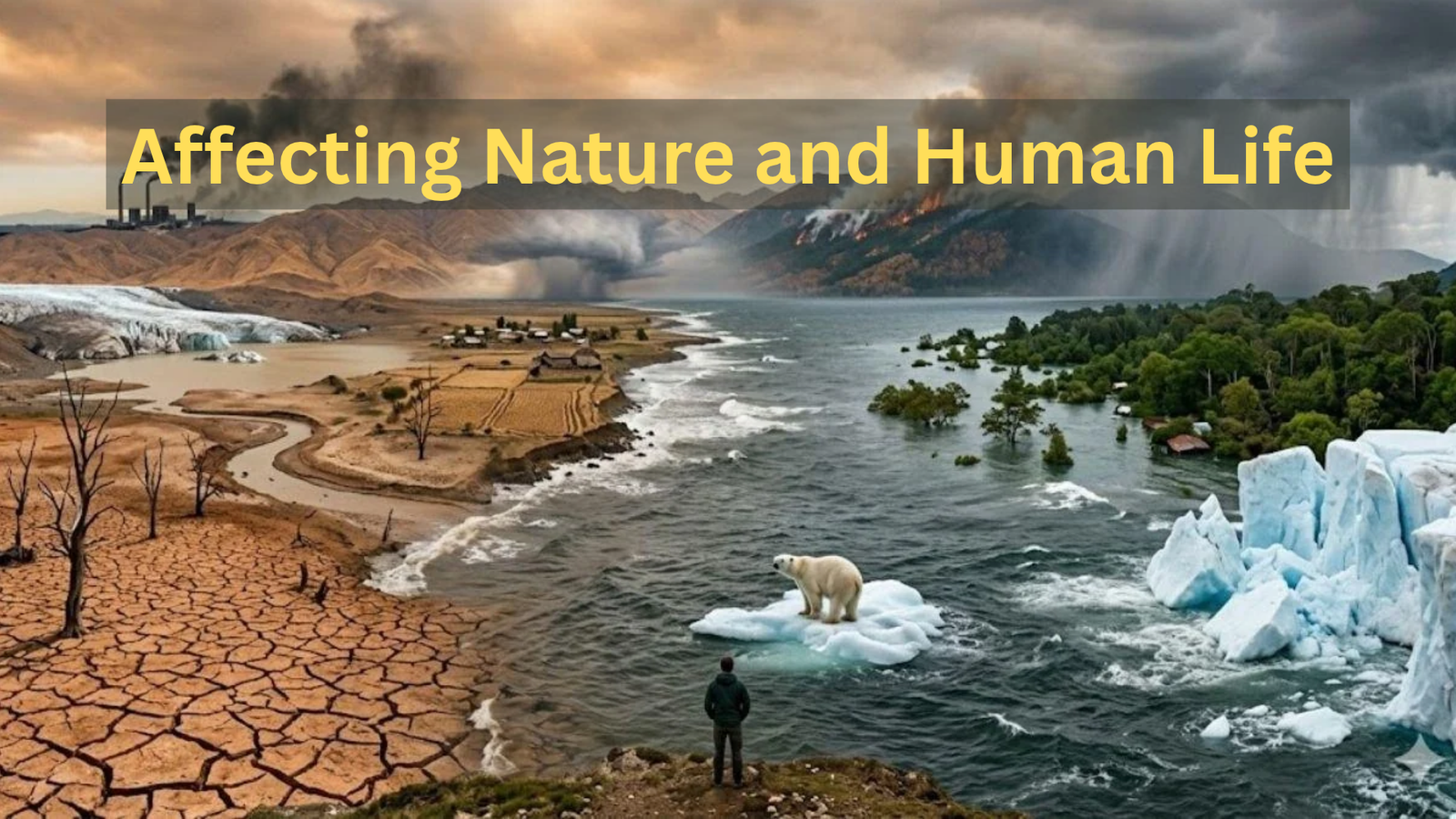
The impacts of climate change are felt at the ecosystem, community and economic level. An increase in temperature can exacerbate heatwaves, strain water supplies and change growing conditions for crops. There is also increased rainfall and flooding in some regions and longer dry spells and increased drought in others. Rising sea levels are also emerging as a threat to coastal communities, where infrastructure is at increasing risk to loss or damage from rising sea levels, as are homes and natural habitats.
New pressures are emerging for wildlife and biodiversity as their migration routes, breeding seasons and food supplies are impacted by changing temperatures and environmental conditions. Specific climate-related pressures are especially harmful to coral reefs, forests, mountain ecosystems and polar environments. Heat exposure, shifts in disease risks, air quality and food and water insecurity also impact human health. The impact is not felt equally and communities that are facing a threat are less equipped to prepare for and recover from environmental harm.
6. Climate Models and What They Tell Us about the Future
These are sophisticated climate models used by climate scientists to learn about the potential future course of Earth's climate in coming decades. Simulations of these interactions between the atmosphere, the oceans, the land, the ice and the greenhouse gases are done with these mathematical systems that are run on a computer. This has allowed scientists to investigate the potential changes in temperature, rainfall, sea level and other climate variability with various assumptions for future emissions based on historical observations.
These models are not able to predict in detail the weather of a specific day many years in the future. Rather, they make simulated projections of long-term climate patterns for various scenarios. For instance, a world with increasingly lower levels of greenhouse gas emissions would yield different results than a world with higher levels of fossil fuel use. Climate projections can assist government, researchers, businesses and communities in preparing for potential risks, and in making informed decisions regarding infrastructure, agriculture, water resource management and environmental protection.
7. Climate Solutions: Can We Protect Our Changing Planet?
While the climate change poses serious challenges, scientific research also points to feasible options for curbing further warming and environmental risks. Increased generation of renewable energies like solar, wind and hydropower can decrease reliance on fossil fuels. Energy efficiency, improved transportation, modernisation of industrial processes and preservation of standing forests are also ways to reduce greenhouse gas emissions. The measures are crucial to achieving a more sustainable economy and energy system.
Adaptation is also critical as some of the impacts of climate change are already happening. Cities can enhance their drainage infrastructure, create heat action plans and increase green space to mitigate extreme heat and flooding. Water-efficient irrigation systems and climate-resilient agricultural crops can be implemented by farmers, and protective infrastructure can be enhanced and natural barriers like wetlands and mangroves can be restored in coastal communities. The transition requires the involvement of governments, businesses, scientists and individuals. Emission reductions and effective adaptation are the best strategy to safeguard ecosystems and people against future climate risks.
Final Verdict
Climate science shows that our planet is experiencing significant changes – caused to a large degree by human activity. Scientific evidence can give us a glimpse into the extent to which the earth's natural systems are interconnected, from the greenhouse effect and warming temperatures to melting ice, shifting ecosystems and projections of the future climate.
The challenge is no longer just to acknowledge that climate change is occurring, it is to determine how well we react to it. Cutting GHG emissions, making investments in clean energy, conserving biodiversity and adapting to environmental hazards are key steps towards a more resilient future. Climate change is a global problem which needs cooperation, decision-making and commitment. Today's knowledge of the science of the changing planet enables us to make informed decisions that will help protect the environment and future generations.