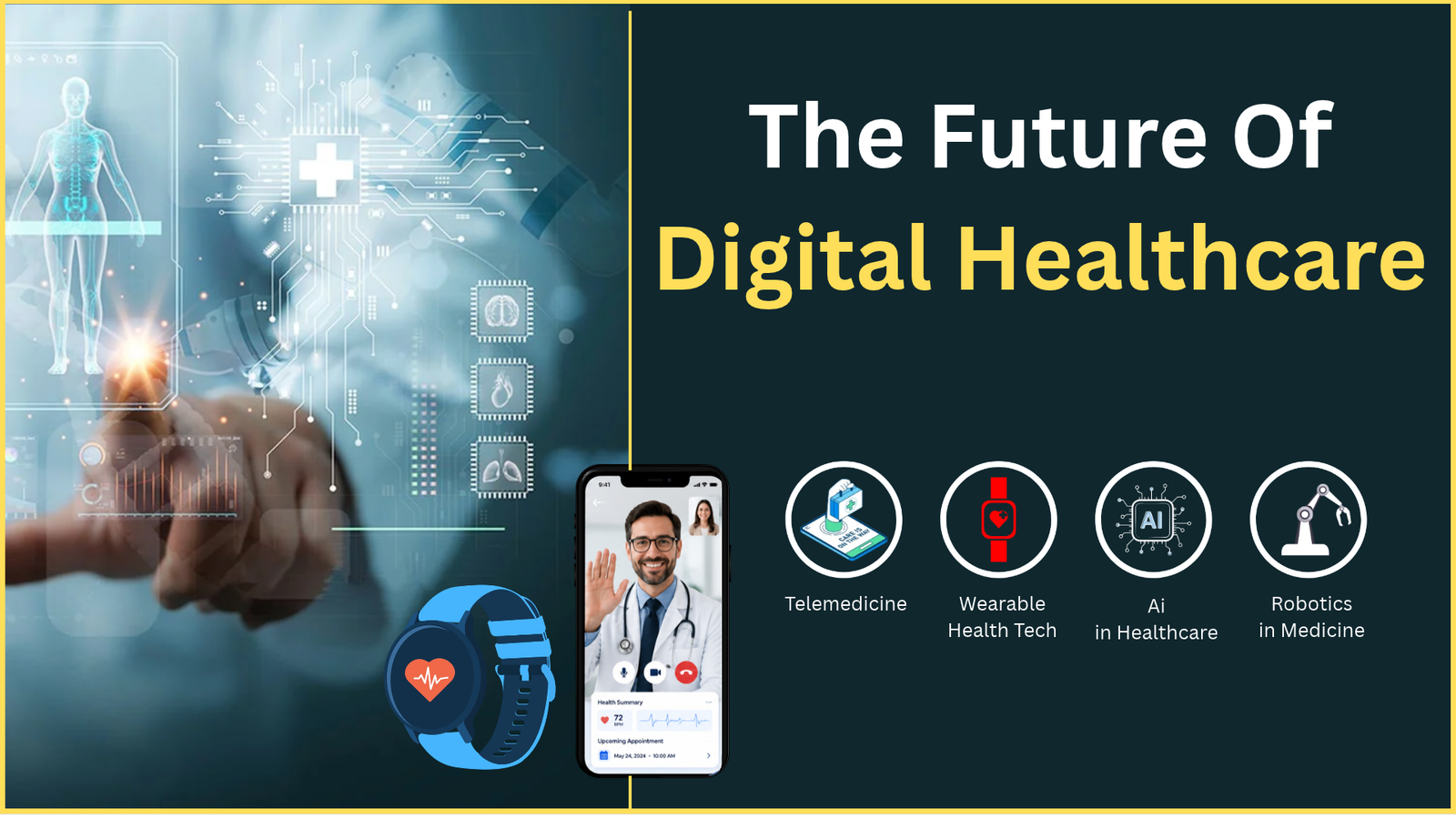
Healthcare is moving into a new era where technology is bringing a new dimension to how people can seek medical help, manage their health and receive treatment. Digital innovation is transforming healthcare to be more connected, accessible, and convenient, from virtual doctor consultations to any health gadgets that can be worn, from electronic medical records to remote patient monitoring, and more. Increasingly, a hospital visit can be avoided by managing a patient's condition and medical needs via secure digital platforms, depending on the patient's condition.
Digital healthcare transformation isn't a matter of just introducing new technologies. It's a matter of designing a health system based on prevention, better health communication between patients and health providers, and guiding informed choices in medical care. The need to overcome unequal access to services, the increasing cost of healthcare and increased demand for health services drive the search for digital solutions for hospitals, healthcare providers, technology companies and governments around the world. But the issues of privacy, cyber security, affordability and reliability are still significant challenges. How patient safety, professional knowledge, and public trust can be integrated with innovation will be a key factor in the future of healthcare.
1. Healthcare Beyond Hospital Walls – Telemedicine
Telemedicine is one of the most significant innovations in digital healthcare. It enables patients to see doctors via video calls, phone lines, and safe online portals, without having to always visit a medical facility. This can be beneficial for follow-up visits, routine appointments, reviewing medications, or giving medical counseling that does not require an examination.
Virtual consultations can help overcome geographical barriers and improve access to healthcare for those in rural or areas with limited medical facilities. Telemedicine can also help those with special needs who may have limited mobility or require frequent check-ups for chronic conditions. Digital appointments can help healthcare providers enhance appointment scheduling and minimize avoidable visits.
However, telemedicine cannot replace all traditional aspects of health care. In an emergency, direct medical attention is still needed as well as in some diagnostic procedures and physical examinations. Good access to the internet, patient privacy and appropriate medical standards are also critical. A hybrid of digital and face-to-face care, where appropriate, is most effective to provide a more flexible health care experience.
2. Wellness and Healthy Lifestyle
Wearable technology is transforming people's ideas about health and fitness. Information from smartwatches and fitness trackers, connected blood pressure monitors, and continuous glucose monitoring systems can be used to gather physical activity, heart rate, sleep patterns, and other health data. Based on the device, this information can be used to identify changes in their daily life and aid in continuous health management.
In remote monitoring, the concept is extended to enable a health care provider to check out specific health data without frequent hospital visits. For instance, those with some chronic diseases might transmit readings for their condition from connected devices to a health care provider. This can facilitate timely follow-up and can aid clinicians to identify if further assessment is required.
But, not all wearable devices are equally accurate or functional for a medical purpose. It's important to not assume that a consumer fitness tracker is a diagnostic device, and abnormal results should be evaluated by a professional. The data needs to be securely transmitted and stored too. The potential of wearable technology is best fulfilled when reliable measurements are used and are properly interpreted and understood in a medical context, rather than by individuals.
3. Artificial Intelligence and Data-Driven Medical Decisions
AI is playing an more and more vital function in digital healthcare. AI-powered tools can help analyze medical images, structure clinical data, detect trends in vast datasets, and assist in specific clinical or administrative processes within medical systems. These applications can assist health-care workers to more efficiently handle information and recognize data worthy of further study.
Research, hospital planning and more personalised approaches can also be supported with data-driven technologies. Digital systems could assist clinicians in understanding various treatment options from relevant patient data and information about their medical history and condition. But they need to be backed by sound evidence and evaluated by competent experts.
AI cannot replace medical knowledge and decision-making. Poorly designed, biased algorithms and inaccurate data can lead to flawed results. It is therefore necessary for healthcare organisations to have the right tests, transparency, monitoring and accountability before implementing these tools in clinical practice. The future of AI in medicine hinges on its ability to consistently enhance patient care, ensuring safety and professional oversight.
4. Electronic Health Records & Connected Healthcare Systems
As healthcare providers transition from paper-based records to more structured electronic data, EHRs are playing a pivotal role in shaping the landscape of medical writing.EHRs have become a key enabler in healthcare's shift from disparate paper records to more comprehensive digital information, impacting medical writing in profound ways. These records may contain medical histories, prescriptions, diagnostic reports, allergies, and information on previous treatments. If systems are connected correctly, and access is granted, information can be shared between healthcare professionals that participate in the care of the patient.
Improved access to medical records can help to prevent the duplication of paperwork, facilitate continuity of care and enable the medical professional to make better decisions based on a fuller health picture. Can also enhance coordination between hospitals, laboratories, pharmacies and other health services.
But just a simple digitization of paper records is not sufficient. The ability to exchange information in an accurate and secure manner will need to be provided between various systems. Both patients and healthcare entities need to be aware of how patient information is being utilized, and there should be defined protocols for accessing, storing, and sharing patient information. To develop a connected healthcare system that patients can be confident with, data protection and interoperability measures must be robust.
5. Digital therapeutics and Personalised Healthcare
Digital therapeutics and mobile health apps continue to open up a new realm of means by which individuals can get health-related assistance. These solutions can offer an organized digital intervention for a specific condition or enable patients to adhere to a treatment plan, depending on their purpose and clinical validation. Mediations reminders, physical exercise, nutrition monitoring, rehabilitation exercises, and mental health programs can also be supported by mobile apps.
Personalised healthcare prioritises the adaptation of prevention and treatment methods to the needs of the individual, rather than following a general approach. Digital tools can support patients and providers to arrange appropriate health data, track progress, and recognize trends that can affect care choices. Sometimes clinically proven software treatments can be used in combination with traditional treatments.
It's crucial to understand that there is a difference between wellness app and medical products used to treat or manage a particular condition. All health apps have not been tested in the same way, and digital guidance might not be appropriate for all patients. Reliable evidence, proper medical supervision, accessibility and clear communication of what a digital product can and cannot do are therefore essential for effective personalised healthcare.
6. Cultural and Social Factors
With the increasingly digitalized healthcare environment, safeguarding patient data is increasingly important. New opportunities arise when electronic records, medical devices, hospital networks and telemedicine platforms are connected.Electronic records, connected medical devices, hospital networks and telemedicine platforms can bring new opportunities to cyberattacks, data theft, and unauthorised access. If a security incident happens, it can reveal private information, interfere with the hospital's operations and even impact patients' safety.
To ensure robust healthcare cybersecurity, organisations must implement various safeguards, such as encryption, access controls, secure authentication, software updates, employee education, and regular security evaluations. They also need to have plans in place for how to deal with incidents and repair the services that are necessary. The technology provider is also responsible for creating products that secure patient information in its life cycle.
Privacy is another important consideration. There should be transparent communication with the patient regarding the process of collecting, storing, sharing, and using health information. Organisations are required to adhere to relevant data protection laws and only use it for authorised purposes. Earning trust is not just about cutting-edge technology - it's about fostering transparency, responsible data handling, and meaningful safeguards that prioritize patient rights in the digital transformation.
7. Opportunities and Challenges in the Future of Digital Healthcare
In the future, the digital healthcare system will take on a new look, with closer links between hospital, home monitoring devices, digital medical records, virtual consultations and clinically proven software. All these technologies may enable healthcare systems to detect the needs of patients earlier, coordinate care better and offer more support beyond the walls of traditional medical facilities. Digital solution could also enhance medical research and support the healthcare sector's growing workloads.
But it's not going to be equitably distributed unless accessibility is seen as a key part of the solution. People may not be able to access a digital service due to limited access to the internet, cost of devices, lack of digital literacy, language barriers, and a lack of accessibility in the design of the applications. The smaller hospitals might also encounter financial and technical challenges for implementing new systems.
Digital infrastructure, training of the workforce, implementation of interoperable systems, clinical assessment, and governance are the investments needed to enable the successful transformation. Governments, health service providers, researchers and technology companies need to collaborate to ensure that digital solutions are aligned with actual health service needs. Technology needs to enhance the communication between patients and health care providers, not be obstacles or be a substitute for human care.
Conclusion
Digital healthcare is transforming the worldwide healthcare panorama by linking people, healthcare practitioners, and healthcare data in novel ways. Telemedicine is increasing access to consultations, wearable devices are helping to monitor health, AI is aiding clinical workflows and EHR is managing information. There's also a new opportunity with digital therapeutics and personalised healthcare in supporting prevention, treatment, and long-term health management.
Innovation should be accompanied by patient safety, privacy, cost effectiveness and medical evidence. Digital tools are not a panacea for healthcare issues and should not be used in place of human judgement and face-to-face treatment when such treatment is required.